The Rise of the Daily Productivity Planner Layout PNG: A Tool for Modern Focus
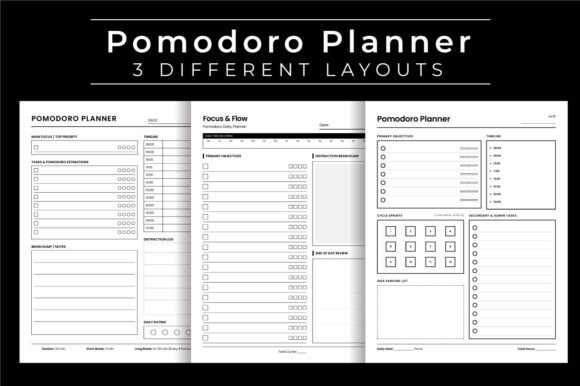
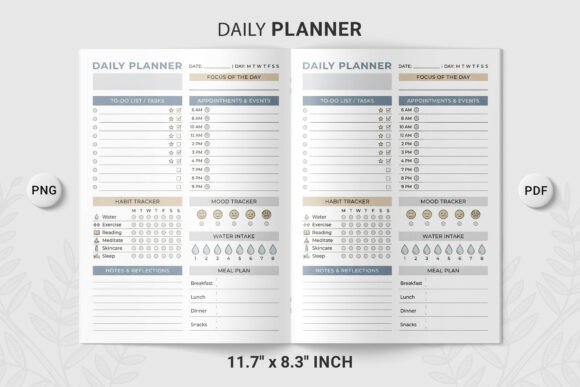
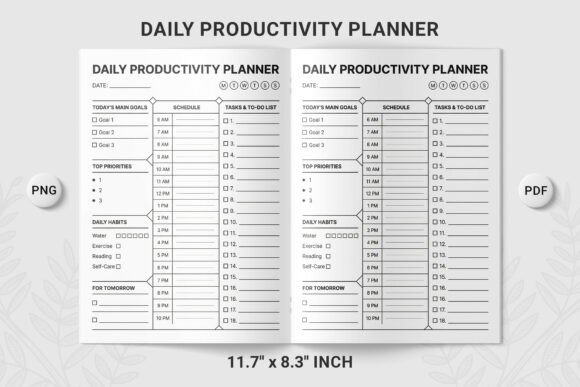
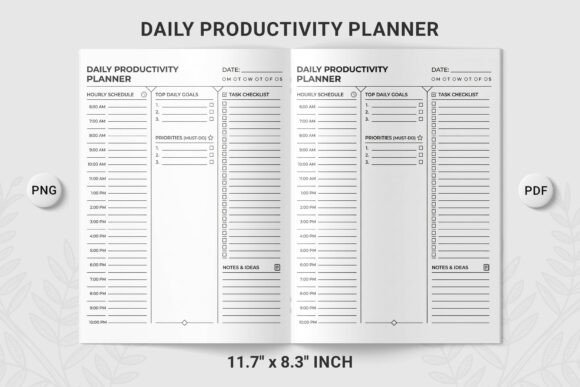
In an era where digital noise competes for every second of our attention, the return to structured, analog-style planning has become a quiet revolution. Professionals, creators, entrepreneurs, and students alike are rediscovering the power of intentionally mapping out a day on paper—or, more precisely, on a Daily Productivity Planner Layout PNG. This design-forward, minimal black-and-white template offers a dedicated space for hourly schedules, daily goals, priorities, must-do tasks, checklists, and notes or ideas. But beyond its clean aesthetic lies a deeper relevance: it meets a growing need for clarity, intentionality, and control in a fragmented world.
The Daily Productivity Planner Layout PNG is not merely a pre-formatted document. It is a visual and structural tool that distills the complexity of modern life into a single, manageable interface. With time slots spanning from 6:00 AM to 10:00 PM, checkboxes for tasks, and dedicated zones for priorities and reflections, this layout provides a framework that aligns with how people actually think, work, and recharge. Its transparent background further amplifies its utility, allowing seamless integration into digital workflows, presentations, or creative projects. But to truly understand why this resource has captured the attention of productivity enthusiasts, designers, and business professionals, we must examine the broader shifts in work culture, design philosophy, and personal effectiveness.
The Productivity Paradox and the Need for Structure
The modern professional is caught in a paradox: more tools than ever promise to save time, yet the feeling of being perpetually busy—without progress—is widespread. Notifications, open-ended task lists, and context-switching erode focus. In response, a counter-movement has emerged: structured, time-blocked planning that imposes external order on internal chaos. The Daily Productivity Planner Layout PNG embodies this approach by combining hourly scheduling with priority setting and task management in one glance.
This layout is particularly resonant because it acknowledges a fundamental insight about human cognition: our brains operate more effectively when boundaries are clear. By segmenting the day into hourly blocks from early morning to late evening, the planner forces a realistic assessment of time. Users cannot overcommit because each hour is finite. The inclusion of a "must-do" section—distinct from general goals—further refines focus. It asks the user to identify the single most important outcome for the day, a practice rooted in the "Eat That Frog" and "MIT" (Most Important Task) methodologies. This is not just a design feature; it is a behavioral intervention.
Professionals in fast-paced industries—from marketing to tech to creative services—are gravitating toward this layout because it bridges the gap between intention and execution. Instead of swimming in a sea of tasks, they can visually allocate energy where it matters most. The checklist, with its satisfying checkbox, provides a tangible sense of accomplishment. This tactile feedback loop—even when the planner is used as a PNG file on a tablet or printed—reinforces momentum.
Design Meets Function: The Minimal Black-and-White Aesthetic
The choice of a black-and-white, minimal design is not accidental. In a world saturated with color, motion, and sensory overload, the reduction to monochrome signals a return to essentials. The Daily Productivity Planner Layout PNG capitalizes on this trend toward minimalism in both digital and physical spaces. The absence of decorative clutter means the user’s attention is directed entirely to content: time slots, tasks, priorities, and notes.
This aesthetic also aligns with broader movements in user interface design and information architecture. Just as modern apps and websites prioritize whitespace and clarity, the planner’s layout reduces cognitive load. The typography is clean, the grid is structured, and the sections are clearly demarcated. For designers, this makes the PNG a versatile asset: it can be imported into graphic design software, used as a background in digital notebooks, or printed at any scale without loss of quality. The transparent background is a subtle but critical feature—it allows the planner to overlay onto any background, from a branded desktop wallpaper to a physical journal page.
Moreover, the minimal aesthetic reflects a cultural shift toward intentional simplicity. Consumers are increasingly rejecting complexity in favor of tools that do one thing well. The Daily Productivity Planner Layout PNG does not attempt to replace a full project management suite; it excels at helping a person plan a single day with clarity. This specificity is its strength. It caters to the professional who values control over their immediate horizon, rather than the overwhelm of long-term Gantt charts.
Why People Are Paying Attention: The Convergence of Work and Well-Being
The attention on daily planners, particularly in a shareable PNG format, is driven by three converging trends: the rise of remote and hybrid work, the mainstreaming of mental health awareness in productivity, and the creator economy's demand for flexible assets.
Remote and hybrid work has blurred the boundaries between professional and personal time. Without a physical commute or office cues, many workers struggle to compartmentalize. The Daily Productivity Planner Layout PNG provides a ritual—a moment to set intentions for the day—that replicates the structure of a morning huddle. By explicitly mapping out hours from early morning to late evening, it respects the non-traditional schedules of freelancers, entrepreneurs, and distributed teams. A designer in Berlin, a marketer in New York, and a developer in Tokyo can all use the same layout, adjusted to their local time zones, to bring order to their day.
Simultaneously, the conversation around productivity has evolved from "doing more" to "doing what matters." The inclusion of a "notes and ideas" section alongside the hourly schedule encourages reflection, not just action. This addresses a changing preference: professionals no longer want to feel like machines optimizing for output. They want tools that honor creativity, ideation, and mental rest. The planner thus becomes a space for both structured execution and creative incubation. The "goals" and "priorities" sections further anchor the day in purpose, reducing the likelihood of reactive work.
For entrepreneurs and content creators, the Daily Productivity Planner Layout PNG is also a product opportunity. The instant digital download, high-quality PNG with transparent background, and print-ready PDF format make it easy to sell, share, or customize. Many creators use such layouts as lead magnets, freebies, or low-cost digital products. The demand is not just for personal use, but for a template that can be rebranded for a specific audience—minimalist planners for students, structured layouts for corporate trainers, or creative versions for artists. The layout’s clean, generic design becomes a canvas for further customization.
Practical Examples: From Freelancer to Corporate Strategist
Consider the case of a freelance marketing consultant managing three client projects simultaneously. Without a structured day, she risks context-switching and missed deadlines. Using the Daily Productivity Planner Layout PNG, she begins her day at 7:00 AM by writing down her must-do: finalize the campaign metrics report for Client A. She then blocks out 8:00–10:00 AM for deep work on that report, 10:00–11:00 AM for client calls, and 11:00 AM–12:00 PM for social media content creation for Client B. The afternoon hours are reserved for lighter tasks: email, invoicing, planning. The notes section captures a spontaneous idea for Client C’s upcoming campaign. At day’s end, she checks off completed tasks and reflects. The layout provides both structure and flexibility—she can adjust blocks as meetings shift or priorities change.
In a corporate setting, a project manager leading a cross-functional team might use the planner to model time allocation during a critical sprint. He prints the layout and posts it in his workspace, filling in time slots for stand-ups, stakeholder reviews, documentation, and buffer time for unexpected issues. The "priorities" section becomes a communication tool: he shares his top three priorities with his team each morning, fostering alignment. The Daily Productivity Planner Layout PNG serves here not only as a personal tool but as a lightweight management artifact.
Students also benefit. A medical student preparing for exams can use the hourly slots to rotate between subjects, ensuring distributed practice. The checklist enables a sense of progress across dozens of micro-tasks: read chapter 5, review flashcards, take a practice quiz. The notes section captures lingering questions or mnemonics. The layout transforms a daunting study plan into a manageable daily rhythm.
Connection to Larger Developments: The Analog-Digital Hybrid Future
The popularity of the Daily Productivity Planner Layout PNG is part of a larger movement toward hybrid planning—combining the tactile, deliberate nature of paper with the accessibility of digital formats. Users are increasingly printing such layouts for bullet journals, embedding them in GoodNotes or Notability on iPads, or adding them as layers in design software like Canva or Photoshop. The transparent PNG format specifically caters to this flexibility. It can be placed over a background image, textured paper, or a branded header, making it infinitely adaptable.
This trend mirrors the broader technology landscape: the best tools are those that integrate into existing ecosystems without friction. The layout does not require a subscription, a login, or a steep learning curve. It is a static, high-quality resource that empowers the user to build their own system around it. This resonates with the maker movement, the rise of digital minimalism, and the growing distrust of over-engineered software that harvests user data. The planner is a return to autonomy.
Furthermore, the emphasis on hourly time slots from 6:00 AM to 10:00 PM reflects an understanding of circadian rhythms and energy management. There is growing recognition that productivity is not about filling every hour, but about aligning tasks with energy levels. Early morning hours are ideal for creative work, late morning for analytical tasks, afternoons for meetings, and evenings for reflection or planning. The layout does not prescribe this—it merely invites the user to consciously assign their time. This flexibility is key to its broad appeal.
For businesses and product designers, the layout also represents a low-cost, high-value asset in the stationery and digital products market. The keywords associated with this PNG—planner, daily productivity, schedule, checklist, goals, priorities, notes, ideas, time management, organization, to-do list, agenda, calendar, work, business, personal, planning, stationery, paper, document, template, layout, clean, simple, black and white, typography, text, list, hourly, task, daily goals, must-do, date, time, empty, blank, writing, record, management, efficiency, structure, layout—reflect a rich semantic field that search engines and consumers alike associate with intentional living.
Why This Layout Works for Today’s Professionals
The Daily Productivity Planner Layout PNG succeeds because it respects the user’s intelligence. It does not gamify productivity with rewards or leaderboards. It does not demand constant engagement. Instead, it offers a blank, structured canvas that the user fills with their own priorities, time slots, and reflections. The checkboxes are not animated; they are there to be ticked off manually, providing a simple dopamine hit of completion. The "must-do" section prevents the common pitfall of filling a to-do list with trivial items while the critical task languishes.
For designers and creators who buy or sell this layout, its value extends beyond personal use. The transparent background and high-quality resolution make it a professional-grade asset that can be used in video thumbnails, digital courses, social media templates, and print-on-demand products. The layout is both a tool and a product—a bridge between productivity methodology and creative commerce.
Ultimately, what makes the Daily Productivity Planner Layout PNG relevant today is its alignment with a deeper human need: the desire to feel in control of one’s time and attention. In an age of endless notifications, open-plan offices, and asynchronous communication, the act of carving out a plan for the day is almost rebellious. It asserts that the individual, not the algorithm or the boss, decides what matters.
Whether you are a student navigating a packed curriculum, a freelancer juggling multiple clients, a corporate leader steering a team, or a creative professional seeking more intentional work sessions, this layout provides a reliable structure. It is not a magic bullet, but it is a proven starting point. The clean black-and-white design invites you to fill it with color—your tasks, your goals, your ideas, your day.
As the boundaries between work and life continue to blur, the demand for simple, effective planning tools will only grow. The Daily Productivity Planner Layout PNG stands out because it does not try to do everything. It helps you do one day well. And that, in a world of infinite demands, is a powerful thing.