Why a Structured Daily Planner Layout Helps You Move from Intention to Action
Most planning tools fail not because they lack features, but because they lack structure. A Daily Planner Layout Sections PNG offers more than a pretty template — it provides a visual framework that converts abstract goals into concrete daily actions. Whether you are a freelancer juggling multiple clients, a parent managing household logistics, or a professional tracking both career and wellness, this type of planner layout gives you a single, coherent place to align your tasks, habits, health data, and reflections.
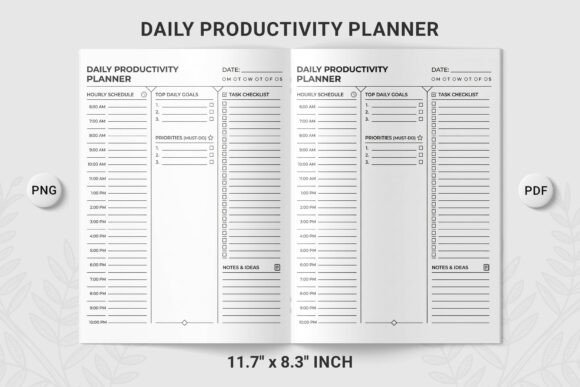
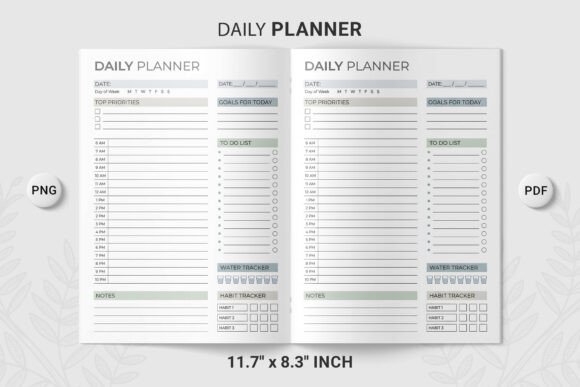
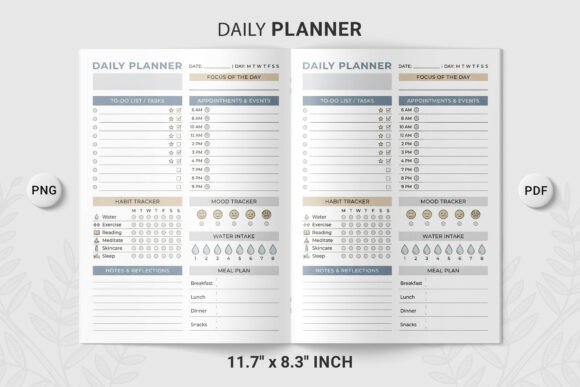
At its core, the Daily Planner Layout Sections PNG is a transparent, ready-to-use design file that organizes your day into distinct, purposeful zones: tasks, appointments, habit tracking, mood logging, water intake, meal planning, and a notes or reflections area. The muted blue, gray, and beige palette is intentionally calming — not just for aesthetics but to reduce cognitive load when you open the page. This layout works as a printable or a digital overlay, meaning you can embed it into a journaling app, a Notion dashboard, or a physical binder.
What makes it strategically useful is the way it forces separation between planning domains. You do not mix your to-do list with your water intake log or your mood tracker. That separation matters. When every element has its own visual container, your brain can process information faster, spot patterns, and avoid the mental fatigue that comes from cluttered, all-in-one lists.
The Strategic Value of Separating Tasks from Habits and Wellness Data
Most daily planners treat everything as a list. Appointments, errands, habits, meals — they all end up in one long stream of checkboxes. A Daily Planner Layout Sections PNG takes a different approach by creating dedicated zones for each type of information. This is not just an organizational preference; it is a strategic decision that affects how you allocate attention throughout the day.
When you have a distinct section for appointments, you can quickly assess time constraints before planning tasks. When the habit tracker sits in its own area, you can check in on streaks without scanning through unrelated items. The mood tracker and water intake log are positioned as wellness metrics, not afterthoughts. This separation allows you to review your day from multiple perspectives — productivity, health, emotional state — rather than collapsing everything into a single "done or not done" binary.
For entrepreneurs and creators, this layout supports a key principle: what gets measured gets managed. By having a dedicated space for mood and water intake alongside work tasks, you embed self-care into your daily workflow rather than treating it as optional. Over weeks of use, you begin to see correlations — for example, low water intake often precedes an unproductive afternoon, or a string of unchecked habits correlates with a dip in mood. Those insights are difficult to surface when wellness data is buried inside a general notebook.
How to Use the Planner Layout as a Decision-Making Tool, Not Just a Log
Many people treat planners as nothing more than record-keepers. They write down what happened and move on. A Daily Planner Layout Sections PNG can function as a decision-making tool if you approach it with intention. The key is to fill out the sections in a specific order, not arbitrarily.
Start with the date and focus of the day. This anchors your attention before you dive into logistics. Then move to appointments — these are fixed and non-negotiable. Next, list your tasks, but limit them to three to five priority items. Research consistently shows that completing a small number of important tasks produces more long-term results than checking off a long list of minor items.
After tasks, fill in the habit tracker. This is where you reinforce small, repeatable behaviors that compound over time. Then log your water intake and mood — these are data points, not judgments. Finally, use the meal plan and notes sections to capture what you ate and any reflections. The order matters because it trains your brain to move from rigid structures (appointments) to flexible priorities (tasks) to personal accountability (habits) to self-observation (mood, water, meals).
A Practical Example from a Typical Professional Day
Suppose you are a marketing consultant with back-to-back client calls, a pending proposal, and a goal to drink more water and exercise. Using this layout, you would first block your calls in the appointments section. Then you would write the proposal as your single most important task. In the habit tracker, you might check "morning stretch" and "read 10 pages." The water intake section lets you pre-fill eight tick marks so you can track progress visually. The mood tracker asks for a simple rating — you note a 7 out of 10 in the morning, and by evening you see it dropped to a 5. The notes section gives you space to write: "Felt stressed after the 3 PM call — need a buffer between meetings tomorrow."
That reflection is gold. Without the structured layout, you might never connect the stress to the schedule gap. The Daily Planner Layout Sections PNG creates a feedback loop that helps you adjust your routines over time, not just execute them.
When to Use This Type of Planner Layout and When It Might Not Fit
This layout works best for people who have a mix of structured commitments and personal wellness goals. Students managing coursework, exams, and part-time jobs benefit from the separation of tasks and habits. Professionals tracking multiple projects alongside health metrics find it useful. Creators and freelancers who need to balance creative output with administrative work also gain from the clarity it provides.
However, there are situations where this layout might not be ideal. If your day is highly unstructured — for example, you are a researcher with long blocks of deep work and few appointments — the appointments section may feel underused. Similarly, if you already use a dedicated habit tracker app or a separate meal planning tool, duplicating that information here could create friction rather than flow. The layout is most valuable when it acts as your single daily command center, not as one more place to log data that you already track elsewhere.
What to Consider Before Committing to This Approach
Before you adopt any structured layout, ask yourself: do I have a clear reason for tracking each section? If you include a water intake log but never review it, you are adding overhead without benefit. If you track mood but do not reflect on patterns, the data becomes noise. The Daily Planner Layout Sections PNG is a tool, not a solution. Its value depends entirely on your willingness to revisit the information it captures.
Another consideration is format. The transparent PNG format allows you to print it, import it into a digital notebook, or use it as a background in apps like GoodNotes or Notability. This flexibility is useful if you switch between paper and digital workflows. But if you are strictly analog, a printed version works just as well — just ensure you have enough copies on hand so you do not feel precious about "ruining" a page. A planner is a tool, not an artifact.
The Risks of Using a Structured Planner Without Clear Goals
One of the most common mistakes people make with detailed planners is filling them out religiously but never reviewing them. You might complete the habit tracker every day for a month and still not change any behaviors because you never looked for patterns. The Daily Planner Layout Sections PNG can lull you into a sense of productivity — the act of checking boxes feels productive, but it is not the same as making progress toward meaningful outcomes.
Another risk is overcommitment. When you see seven or eight sections on a page, you may feel pressure to fill every one every day. That pressure can lead to burnout or guilt when you inevitably skip a section. The layout is a framework, not a mandate. Some days you will only use the tasks and appointments sections. Other days the mood and notes sections will carry the most weight. Let the layout serve you, not the other way around.
There is also a subtle risk of using the planner as a replacement for decision-making. Writing down "focus of the day" does not guarantee you will actually focus. The layout can give the illusion of clarity while you still drift from task to task. The discipline comes not from the design but from the choice to honor the priorities you set in the morning.
How to Make the Layout Part of a Sustainable Daily Routine
To use this type of planner effectively over the long term, integrate it into a consistent daily ritual. Spend five minutes each morning filling out the layout before you check email or social media. Use the same five minutes each evening to review what you recorded in the mood tracker, water log, and notes section. Ask yourself one question: "What will I do differently tomorrow based on what I see today?"
This review loop is what separates a planner from a diary. The Daily Planner Layout Sections PNG is designed to support that loop — the sections are spaced and labeled clearly so that scanning them takes moments, not minutes. Over time, you will likely find that you use certain sections more than others, and that is fine. The layout is a starting point, not a prison.
Adapting the Layout for Teams, Clients, or Collaborative Projects
While the layout is primarily designed for individual use, it can also serve as a template for team coordination or client work. For example, a coach or therapist might share a printed or digital version with clients to help them track mood, habits, and appointments between sessions. A small business owner could use it as a personal daily dashboard that later feeds into weekly team meetings — the notes section becomes a running log of blockers and observations.
Because the PNG has a transparent background, it is easy to place inside a branded document or a shared digital workspace. You can overlay it on a company template or embed it in a client-facing resource without visual clutter. This versatility makes it useful beyond personal productivity.
Long-Term Value: Why a Consistent Daily Review Matters More Than the Layout Itself
No single layout will transform your productivity or wellness overnight. The long-term value of a Daily Planner Layout Sections PNG comes from repetition and reflection. When you use the same structure every day, you build a dataset about your own behavior. You begin to see that you are most productive on days when you drink enough water, or that your mood dips on days with back-to-back appointments and no meal plan.
These insights are not abstract — they are directly actionable. You can adjust your schedule, your habits, or your environment based on what the planner reveals. Over months, this feedback loop compounds into better routines, sharper decision-making, and a more realistic understanding of your own capacity.
The design itself — soft tones, clean lines, distinct zones — supports this process by reducing visual friction. You are not fighting the layout to find the information you need. The layout steps aside and lets the data speak. That is the mark of a well-designed tool, and it is why a structured daily planner remains relevant even in an era of apps and digital dashboards.
Final Thoughts on Using This Planner Layout Intentionally
If you are considering adding a Daily Planner Layout Sections PNG to your workflow, start by identifying the one or two areas where you most need clarity. Maybe your task management is fine, but you never track habits. Or maybe you have a solid wellness routine but struggle with meal planning. Let the layout fill the gap rather than trying to use every section from day one.
Print one copy and test it for a week. Adjust the way you fill it out. Skip sections that do not serve you. Add annotations in the margins. The goal is not to use the layout perfectly — it is to use it purposefully. When you approach it that way, a simple PNG file becomes a genuine productivity asset that supports your goals, your routines, and your long-term results.