Summer Coloring Activities for Kids
A Fresh Take on Creative Play
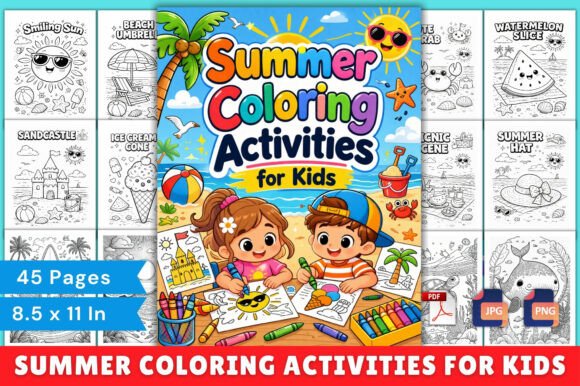
If you have spent any time searching for children’s activity books, you know the market is flooded with options. Many promise creativity but deliver little more than generic clip art slapped onto cheap paper. Summer Coloring Activities for Kids stands apart because it was built with intention. Every page feels considered—not rushed. The illustrations carry a warmth that invites children in rather than overwhelming them with clutter. Bold outlines keep things accessible for small hands still developing control, while the summer theme—beaches, fruit, sea animals, sunshine—gives the whole book a cohesive, joyful energy that feels like a real vacation on paper.
The visual personality here is cheerful without being chaotic. It is friendly, open, and reassuring. There is a softness to the linework that suggests patience rather than perfection. Kids do not need to color inside the lines to feel successful, and the designs support that freedom. The book does not lecture or overcomplicate. It simply offers a space where creativity can happen naturally.
More Than a Coloring Book: Activity Design That Works
What makes this resource genuinely useful is how it blends coloring with light cognitive tasks. Mazes, tracing exercises, and matching games are woven into the experience so seamlessly that children rarely realize they are building skills. They are just having fun. But as a designer, marketer, or educator, you recognize the strategy: engagement layered with developmental value.
For publishers and content creators evaluating this type of product, the structure offers a strong model. The page layout consistently balances white space with illustration density. That balance matters. Too much empty space and young readers lose interest. Too much detail and they shut down. Summer Coloring Activities for Kids hits a sweet spot where every page feels complete but not crowded. The activities vary just enough to sustain attention across multiple sittings, which is critical for parents looking to occupy children during travel, quiet time, or summer afternoons when screen fatigue has set in.
From a brand identity perspective, the book projects reliability. It does not try to be trendy or gimmicky. It trusts that quality illustration and thoughtful activity design will resonate more than flashy covers or celebrity endorsements. That approach builds trust with the adults who make the purchase and with the children who return to the pages again and again.
Where the Book Delivers Real Value
The practical applications are broader than you might expect. Yes, it works beautifully as a home activity for rainy days or quiet evenings. But the book also shines in classroom settings, particularly for preschool and early elementary teachers who need non-digital resources that support fine motor development and visual discrimination skills. Summer camps, pediatric waiting rooms, and family road trips all become natural environments for this kind of resource.
For small business owners producing educational products, the design choices here offer useful lessons. The thick lines are not an accident. They reduce frustration for children still developing grip strength and hand-eye coordination. The large illustrations make the book feel generous and inviting rather than cramped and intimidating. These are decisions rooted in real understanding of the end user, not assumptions made at a desk.
Brand strategists and marketers working in children’s products should note how the book communicates its value without shouting. The cover is bright but not harsh. The title is clear and descriptive. The back cover reinforces key benefits without resorting to bullet-point overload. Every design asset works together to create a consistent, trustworthy impression. That is the kind of coherence that builds recognition over time.
Choosing the Right Resource: What to Evaluate
If you are a parent, educator, or publisher evaluating products like this, here are the criteria that matter most.
- Age alignment. The 4–8 range is accurate for this book. Younger children enjoy the simple shapes and bold outlines. Older children engage more with the activities and can add detail to the illustrations independently. If you work with children outside this range, look for resources that adjust complexity accordingly.
- Paper and format. Physical quality matters. Pages that bleed through when markers are used create frustration. This book uses paper that handles crayons and colored pencils well. Markers require a light touch, which is a reasonable trade-off for the affordability of the format.
- Activity variety. A good activity book does not rely on one type of task. The mix of coloring, tracing, mazes, and matching keeps children engaged over time. If you see a book that only offers coloring, it will likely lose interest within a single session.
- Visual consistency. Look for a unified illustration style throughout. Books where pages feel disconnected or rushed give children a disjointed experience. This book maintains a consistent aesthetic that reinforces the summer theme page after page.
- Licensing and commercial use. For publishers and content creators, this is a crucial consideration. If you are adapting or repurposing activity content for commercial projects, always review the licensing terms carefully. Some books permit limited reproduction for classroom or business use. Others do not. Know what you are buying before you build a product around it.
Design Observations Worth Noting
From a typography and layout standpoint, the book uses a sans serif approach for instructional text that is clean and legible. There is no struggle to read the directions. The font size is generous, and the line spacing prevents visual fatigue. These may seem like small details, but in a product aimed at young children and the adults guiding them, readability directly impacts usability.
The cover functions as a strong example of modern typography applied to children’s publishing. The title is prominent without dominating. The subtitle provides context without creating noise. The overall composition respects the hierarchy necessary for shelf appeal: title first, then supporting information, then visual invitation through the illustration.
For anyone working in logo design, editorial design, or packaging design for children’s products, studying how this book handles typography alongside illustration is instructive. The font pairings are simple—one primary display font for the title, one supporting sans serif for body text. That is often enough. You do not need a library of typefaces to create an effective, professional result. You need clarity, consistency, and confidence in your choices.
Practical Tips for Parents and Educators
If you bring this book into your home or classroom, here is how to extend its value beyond the pages.
Let children choose their own color palettes. Resisting the urge to correct or guide too heavily builds autonomy. The book is designed to support that independence. When a child finishes a page, hang it up. Displaying the work reinforces the connection between effort and pride. Over the course of a summer, a collection of finished pages becomes a tangible record of growth.
For educators, pair the book with real-world objects. After coloring a page about beach animals, bring in a starfish or a shell. After tracing a maze, set up a simple physical version with blocks or tape on the floor. These extensions deepen the learning without requiring additional materials.
For content creators and small business owners, consider the book as a reference for your own product development. Study the page flow. Notice where activities repeat and where they vary. Pay attention to how instructions are phrased and where they are placed. These are the details that separate a forgettable product from one that earns repeat use and word-of-mouth recommendations.
Why This Book Deserves a Place in Your Rotation
The best resources are the ones that do not try to be everything to everyone. Summer Coloring Activities for Kids knows exactly what it is: a warm, accessible, skill-building activity book that respects both the child using it and the adult who purchased it. It does not promise to make your child a prodigy. It does not claim to replace education or therapy or parental involvement. It simply offers a well-designed space for creativity, focus, and quiet joy during a season that can sometimes feel too busy.
For designers, marketers, publishers, and educators, it also serves as a reminder that thoughtful execution beats bells and whistles every time. The book’s success is not accidental. It comes from understanding the audience, respecting the medium, and caring about the experience from cover to cover. That is the kind of design thinking worth studying—and the kind of resource worth sharing.