Happy Hearts Planner for Kids
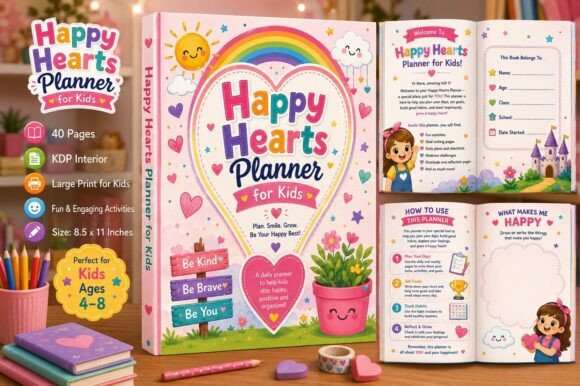
Children thrive when they have gentle structure, space to express themselves, and small wins to celebrate each day. The Happy Hearts Planner for Kids brings all three together in a colorful, playful format designed to nurture positive habits, emotional awareness, kindness, and organization. Whether you are a parent supporting your child’s daily routine, an educator building self-awareness into the school day, or a creative entrepreneur looking for fresh content ideas, this planner offers much more than scheduling pages. It is a thoughtful tool that blends goal setting, gratitude, mindfulness, and emotional check-ins into a single, kid-friendly resource.
What makes this planner stand out is its intentional focus on the whole child. It does not simply ask children to track chores or homework. It invites them to explore how they feel, what they are grateful for, and how they can be kind to themselves and others. With 40 different pages, each designed at 8.5×11 inches, the planner provides enough variety to keep engagement high throughout the year. The Certified of Happiness at the end adds a tangible reward that children can feel proud of.
Building Emotional Intelligence Through Daily Check-Ins
Emotional development is at the heart of the Happy Hearts Planner for Kids. The daily mood and smile trackers, combined with emotional check-in activities, give children a simple way to name and reflect on their feelings. For a child who struggles to articulate emotions, a visual tracker with smiley faces or color-coded moods can become a safe starting point. Over time, this daily practice builds vocabulary around feelings and encourages self-regulation.
Parents can use these pages during morning or evening conversations. A quick glance at the tracker helps adults understand how a child is arriving into the day or winding down after school. Teachers might print individual pages for a morning meeting routine, asking each child to color in their mood before sharing. This small ritual fosters a classroom culture that values emotional honesty.
For creative professionals, these emotional check-in pages are excellent templates to adapt for printables, digital stickers, or interactive journal apps. The concept of “emotional literacy” is a strong niche, and the planner provides a ready-made framework that can be expanded into separate products such as mood cards, feeling wheels, or emotion-themed coloring sets.
Goal Setting and Habit Building That Feels Like Play
Children are never too young to learn the satisfaction of setting a goal and working toward it. The goal setting and habit building pages in the Happy Hearts Planner for Kids transform abstract concepts into concrete, achievable steps. Instead of a generic to-do list, the planner uses bright visuals, stars, and progress bars that make tracking feel like a game.
A practical example: a child might set a goal to read for 15 minutes each evening. The planner page could include a weekly grid where each day the child colors in a book icon after completing the reading. This visual reinforcement is powerful. It builds consistency without pressure. Parents can help choose goals that match a child’s age and interest, starting with one habit at a time to avoid overwhelm.
From a design perspective, these pages are ideal for creators who want to produce habit tracker inserts for bullet journals or printable planners. The balance between structure and flexibility is important. Too many categories can feel intimidating. Too few can feel meaningless. This planner strikes that balance by offering simple fields and encouraging illustrations that invite participation.
Gratitude and Kindness Exercises That Strengthen Connection
Gratitude is a skill that grows with practice. The dedicated gratitude and kindness exercises in this planner help children notice what is good in their world and consider how they can contribute positively to others. These pages might prompt a child to write one kind thing they did today or name three things that made them smile.
These activities nurture empathy and social awareness. When children regularly reflect on kindness, they are more likely to act with compassion in real-life situations. For families, this creates a shared language around values. A parent might say, “Let’s look at your gratitude page before dinner,” turning a simple worksheet into a family tradition.
For educators, these pages are valuable for social-emotional learning (SEL) curriculum. They align with standard SEL goals around self-awareness, relationship skills, and responsible decision-making. You could even use the prompts as writing prompts for group discussions. For creators, the kindness and gratitude theme is evergreen and marketable across seasons, holiday periods, and classroom subscriptions.
Daily Routines with Morning and Bedtime Planner Pages
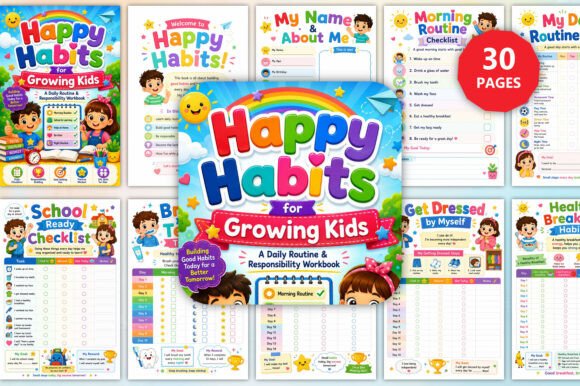
Morning and bedtime routines can be a challenge for many families. The Happy Hearts Planner for Kids includes dedicated pages to make these transitions smoother. A morning routine checklist might include brushing teeth, making the bed, eating breakfast, and packing a backpack. A bedtime page could list washing up, reading a story, and saying goodnight to family members.
The key is that children participate in checking off each step. This builds independence and reduces the need for constant reminders. For parents, the routine pages serve as a visual contract. The child knows what is expected, and the parent can gently point to the chart rather than repeating instructions. This approach is especially helpful for younger children who benefit from visual cues.
Designers can use these pages as inspiration for custom routine charts tailored to specific age groups or themes. A nighttime routine chart with a moon and stars motif, or a morning chart with a sunshine and rainbow theme, can be adapted for digital stickers, printable kits, or even wall posters.
Weekly and Monthly Planning Made Simple
Organization is a skill that children build gradually. The weekly and monthly planning pages in this planner offer a gentle introduction to time management. Rather than dense grids and complex categories, the layouts use open spaces for drawing, writing, or sticking small notes. Children can plan their activities, note important events, or simply reflect on their week.
Parents and teachers can use these pages to teach basic calendar skills. Show a child how to mark a school holiday, a playdate, or a library trip. Over time, children begin to understand future planning and the concept of time passing. For small business owners creating educational content, these planner pages are versatile. They can be sold as standalone undated calendars, included in homeschool bundles, or offered as free samples to attract email subscribers.
Positive Affirmations and Mindfulness Pages
Positive affirmations are short, empowering statements that help children build self-esteem and resilience. The Happy Hearts Planner for Kids includes affirmation pages that children can read, trace, or decorate. Phrases such as “I am brave,” “I can try new things,” or “I am kind” reinforce a growth mindset.
Mindfulness exercises add another layer of emotional support. Simple activities such as deep breathing prompts, five-senses exercises, or quiet coloring spaces help children slow down and regulate their nervous system. In a world full of screens and stimulation, these pages are a quiet anchor.
For counselors and therapists, these pages can be integrated into sessions with young clients. They offer a non-threatening way to start conversations about self-worth and coping strategies. Creators might expand this section into a separate mindfulness journal for children, combining breathing techniques with creative prompts.
Fun Learning Activities and Puzzles
Learning should feel like discovery, not drill. The inclusion of fun learning activities and puzzles ensures that the planner feels like a treat rather than a chore. Word searches, mazes, matching games, and simple reasoning exercises are scattered throughout the pages. These activities reinforce cognitive skills such as focus, pattern recognition, and problem-solving.
Parents can use these puzzles as rewards after completing other planner tasks, or as screen-free entertainment during travel. Teachers might assign a puzzle page as a warm-up exercise. The variety prevents boredom and gives children something to look forward to when they open their planner. For content creators, these puzzles serve as ready-made templates that can be repurposed into activity books or seasonal packets.
Who Can Use This Planner and How to Adapt It
The Happy Hearts Planner for Kids is designed for children, but the real users are often the adults guiding them. Here is how different audiences can adapt it:
- Parents: Print the pages and place them in a binder. Use morning and bedtime pages daily, mood trackers hourly, and gratitude pages weekly. Model the activities yourself to show that emotional health is important for the whole family.
- Teachers: Use individual pages for morning check-ins, SEL lessons, or early-finisher activities. The pages work well in a calm-down corner or as part of a personal growth portfolio.
- Homeschooling families: Integrate the planner into morning time. Use the learning activity pages as mini-lessons and the goal pages to track academic progress.
- Designers and content creators: Study the layout styles for inspiration. Consider creating a digital version with interactive elements for tablets, or a seasonal version with holiday-themed affirmations and puzzles. The core structure is a strong foundation for product extensions.
- Small business owners and bloggers: Write about the planner as a case study in children’s mental health tools. Share printable samples as lead magnets. Create comparison posts or routine-building guides that reference the planner’s approach.
Practical Tips for Getting the Best Results
To keep the planner effective and engaging, a few practical strategies go a long way. First, involve the child in choosing which pages to use. Let them pick the mood tracker color scheme or decide which affirmation to write. This ownership increases buy-in. Second, avoid turning the planner into a chore. If a child resists a page, skip it for the day. The goal is connection, not compliance.
Consistency matters more than perfection. A few minutes each day with the planner builds a habit far more successfully than an hour once a week. Keep the planner in an accessible place. If using a printed version, a ring binder or a spiral-bound notebook works well. For digital use, a tablet with a stylus can feel exciting and modern to older children.
Finally, celebrate the completion of the planner. The included Certificate of Happiness is a powerful motivator. Make a small ceremony out of awarding it. This reinforces the child’s sense of accomplishment and encourages them to start a new planner cycle with enthusiasm.
Creative Directions and Product Expansions
Looking beyond the immediate pages, the Happy Hearts Planner for Kids opens doors for related projects. Consider a “Kindness Calendar” that features one small act of kindness per day. Or a set of affirmation cards that can be cut out and displayed on a mirror or desk. The morning and bedtime routine pages could become magnetic charts for the refrigerator.
For digital products, the planner can be adapted for use in apps like Goodnotes or Notability. Interactive stickers, layerable images, and fillable form fields add a modern twist. For subscription boxes or membership sites, the planner provides a monthly theme focus—one month could emphasize gratitude, another could focus on goal setting, and another on emotional check-ins.
Educators might create a classroom version where each child has a personal planner, and the teacher has a large version for the wall. This shared experience builds community and normalizes discussions about feelings.
Organizing for Clarity and Lasting Impact
A planner is only as good as its ability to be used consistently. The clear layout, cheerful design, and logical page flow of the Happy Hearts Planner for Kids support that usability. Pages are not cluttered. Instructions are simple. Visuals are inviting. This means children can navigate much of it independently after a short introduction.
To keep results clear and organized for different age groups, consider sorting pages by theme. A parent could print only the mood and gratitude pages for a younger child, then add goal pages and weekly planning as the child grows. This layered approach extends the planner’s lifespan and adapts to developmental stages.
For creators, consistency in branding and style across each page is crucial. This planner demonstrates how to maintain a cohesive look while varying content. Bright colors, rounded shapes, and friendly fonts create a predictable and reassuring environment for children.
The Happy Hearts Planner for Kids is more than a collection of worksheets. It is a gentle companion for children learning to navigate their emotions, build positive routines, and grow in kindness and confidence. With thoughtful use, it becomes a meaningful part of a child’s daily life and a valuable resource for the adults who guide them.