Kids Worksheets: A Practical Evaluation for Parents and Educators
Finding suitable learning materials for young children is a task that many parents and educators face regularly. The market offers countless options, but not all resources meet the fundamental needs of early learners. Kids Worksheets is a printable activity pack designed to address this gap by providing structured, age-appropriate exercises that support foundational skills. This article offers a balanced evaluation of what Kids Worksheets offers, who it may suit best, and what factors to consider before choosing it for your teaching or parenting toolkit.
What Kids Worksheets Provides
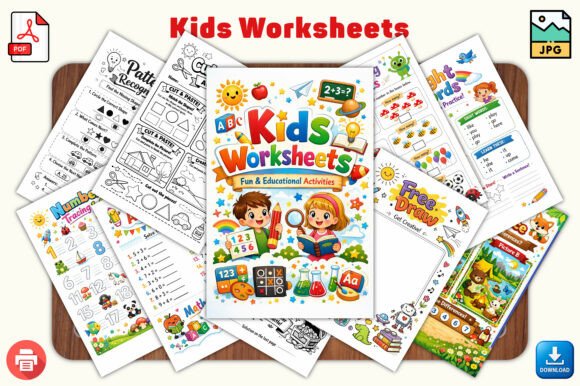
Kids Worksheets is a collection of 20 printable pages sized at 6 by 9 inches, delivered in both JPG and PDF formats. The worksheets feature a clean white background and are designed with a print-friendly layout that avoids unnecessary distractions. The activities included aim to support early learning skills such as writing, tracing, problem-solving, and creative thinking. The pack is intended for young learners, typically preschool and early elementary ages, and is suitable for use in home settings, homeschool environments, and traditional classrooms.
The design philosophy behind Kids Worksheets focuses on simplicity and usability. Each page presents tasks in an uncluttered format, which helps children concentrate on the activity at hand. The pack covers multiple activity types, offering variety within a single resource. This approach allows children to practice different skills without needing to switch between separate products or materials.
Why Someone Might Consider Kids Worksheets
Many parents and teachers encounter common challenges when selecting learning materials. Worksheets that are too complex can frustrate young learners, while overly simple pages may fail to hold their interest. Age-appropriate design is a genuine concern, and Kids Worksheets attempts to strike a balance that keeps children engaged without overwhelming them.
Another practical consideration is ease of use. Printable resources like Kids Worksheets eliminate the need for specialized software or internet access during use. Once downloaded and printed, the worksheets are ready to go. This simplicity is appealing for caregivers who want to minimize setup time and focus directly on interaction with the child.
Cost is also a factor. Compared to subscription-based learning platforms or purchased workbooks, a printable pack represents a one-time investment. For families or teachers working within a budget, this can be a practical alternative to recurring expenses.
Supports Foundational Skill Development
The activities included in Kids Worksheets are geared toward building core competencies in early learners. Tracing exercises help develop fine motor control and hand-eye coordination. Writing practice reinforces letter and number recognition while encouraging proper pencil grip. Problem-solving tasks stimulate logical thinking and pattern recognition. These skills form the bedrock of later academic success, and consistent practice with well-designed worksheets can reinforce classroom or homeschool instruction.
Encourages Independent Work
The clean layouts and straightforward instructions allow children to work through pages with minimal adult guidance. This independence is valuable for building confidence and self-reliance. Parents and teachers can use the worksheets as quiet-time activities or as part of a structured learning routine where children learn to follow directions and complete tasks on their own.
Versatile Across Learning Environments
Because Kids Worksheets is print-based and requires no technology, it works well in a variety of settings. Homeschooling families can integrate it into their daily lessons. Classroom teachers can use it for morning work, center activities, or supplementary practice. Parents can pull out a page for road trips, waiting rooms, or rainy afternoons. This flexibility makes it a practical addition to any educational resource collection.
Boost Creativity and Confidence
Creative activities within the pack encourage children to express themselves and explore ideas. Completing pages successfully also builds a sense of accomplishment. For young learners who may struggle with more abstract or open-ended tasks, worksheet-based activities provide clear goals and tangible results. Seeing a finished page can be motivating and reinforce a positive attitude toward learning.
Limited Scope of Content
With 20 pages, Kids Worksheets provides a focused but relatively small set of activities. For parents or teachers seeking an extensive curriculum or a full year of materials, this pack will likely need to be supplemented with other resources. It is best viewed as a supplementary tool rather than a comprehensive program. Buyers should assess whether the variety and quantity of activities align with their specific learning goals.
Printing and Preparation Required
While the digital format offers convenience in some respects, it does require access to a printer and paper. For those who prefer reusable or laminated materials, additional preparation may be needed. The 6 by 9 inch page size is smaller than standard letter-size sheets, so users should check compatibility with their printing preferences. Some may find this size ideal for little hands, while others may prefer larger pages for easier manipulation.
One-Size-Fits-All Design
Kids Worksheets is designed for a broad audience of young learners. This means the activities may not be tailored to the specific needs of every child. Some children may find certain pages too easy or too challenging. Parents and teachers should be prepared to select pages that match each child's current skill level and provide additional support or enrichment as needed. Individualization remains the responsibility of the adult facilitator.
Who Kids Worksheets Suits Best
Kids Worksheets is a strong fit for parents and educators who value simplicity and are looking for ready-to-use materials that require minimal preparation. It works well for those who:
- Need quick, no-fuss activities for short learning sessions.
- Prefer print-based resources over screen-based learning tools.
- Are introducing young children to structured worksheet activities for the first time.
- Want to supplement existing curricula with additional practice pages.
- Operate on a budget and want a low-cost resource.
- Work in settings where technology access is limited or discouraged.
Homeschooling families, in particular, may appreciate the straightforward design and the ability to print multiple copies for siblings or repeated practice. Classroom teachers can use the worksheets for independent work stations or as take-home materials for students who need extra reinforcement.
When Alternatives May Be Worth Considering
While Kids Worksheets offers clear benefits, it may not be the best choice in every situation. Alternatives might be more appropriate for those who:
- Require a comprehensive, sequential curriculum that covers multiple subjects in depth over an extended period.
- Prefer digital interactive activities that provide instant feedback or adaptive learning paths.
- Need materials that align with specific state standards or educational frameworks.
- Work with children who have advanced skills beyond the typical early learner level.
- Seek resources that incorporate more hands-on, manipulative-based learning rather than paper worksheets.
For these scenarios, other options such as complete curriculum programs, educational apps, or activity subscription boxes may better meet the need. Evaluating your child's or student's learning style, attention span, and current skill level will help determine whether a worksheet-based approach is suitable or whether a more dynamic method would be more effective.
Practical Decision-Making Insights
When evaluating Kids Worksheets or any similar resource, consider the following factors:
- Learning objectives: Identify the specific skills you want to target. If the goal is fine motor practice and early writing, this pack is well-aligned. If you need reading comprehension or math problem-solving for older children, look for more advanced materials.
- Usage context: Think about when and where the worksheets will be used. For structured lesson time, a larger variety of pages may be needed. For occasional practice or travel, 20 pages may be sufficient.
- Child engagement: Some children thrive with worksheet activities, while others find them tedious. Observe your child's response to similar materials before committing to a purchase. If possible, preview sample pages to gauge interest.
- Supplementation plan: Consider how this resource fits into your overall learning plan. Worksheets work best when combined with hands-on activities, reading, play, and real-world experiences. No single resource should carry the entire learning load.
- Reusability: Decide whether you will use the worksheets once or laminate them for repeated practice. This affects the long-term value of the purchase.
Final Thoughts on Evaluating Kids Worksheets
Kids Worksheets fulfills a specific role in the landscape of early childhood resources. It provides accessible, print-friendly activities that support essential skills in a straightforward format. The pack is not designed to replace a comprehensive curriculum or to meet every educational need, but it serves as a practical tool for parents and teachers who want quality supplementary materials without complexity.
The decision to purchase Kids Worksheets should be based on an honest assessment of your child's or classroom's current needs. If you value simplicity, affordability, and print-based learning, this pack offers a low-risk way to add structured practice to your routine. If your requirements lean toward depth, breadth, or digital interactivity, exploring other options may serve you better.
Ultimately, the most effective learning materials are those that are used consistently and with intention. Whether Kids Worksheets becomes a staple in your collection or a occasional resource depends on how well it fits your unique situation. By considering the benefits, tradeoffs, and practical factors outlined here, you can make an informed choice that supports meaningful learning experiences for the children in your care.