Building Lasting Life Skills: A Deep Look at the Happy Habits for Growing Kids Workbook
Every parent, educator, or caregiver eventually confronts a familiar challenge: how do you teach a child to brush their teeth without being reminded, pack their school bag on their own, or show kindness without prompting? These small daily actions form the foundation of independence and character. Yet translating abstract concepts like responsibility or discipline into something a child actually wants to do is no small feat. The Happy Habits for Growing Kids Workbook attempts to solve this problem not through lectures or charts, but by turning routine into an engaging, reward-based game that children genuinely enjoy.
At first glance, this workbook looks like a colorful activity book filled with prompts, stickers, and tracking pages. But its design goes much deeper. The Happy Habits for Growing Kids workbook is built around a simple psychological principle: children thrive on structure, but they resist it when it feels like control. By reframing daily tasks as challenges or missions, the workbook shifts a child's mindset from "I have to" to "I get to." This subtle reframing is critical for long-term habit retention, and it is woven into every page of the resource.
Why Habit Formation Matters More Than Task Completion
Many parents focus on whether a task got done—did the child brush their teeth? Did they finish homework? But the Happy Habits for Growing Kids Workbook emphasizes something more important: the process of building the habit itself. A child who completes a chore only because they are watched has not learned responsibility. A child who completes it because they have internalized a routine has gained a life skill. This workbook supports that internalization by breaking each habit into small, repeatable steps that feel manageable rather than overwhelming.
For educators and professionals working with children, this distinction is crucial. A workbook that simply lists tasks risks becoming another chore. But one that uses color, reward systems, and goal-setting taps into a child's natural desire for autonomy and achievement. The Happy Habits for Growing Kids Workbook does exactly that, transforming abstract concepts like discipline and consistency into concrete, trackable actions.
Core Areas the Workbook Addresses in Daily Life
The workbook is not a one-size-fits-all checklist. Instead, it targets several key domains of a child's day, each with its own set of activities and tracking mechanisms. Understanding these domains helps parents and educators see how the workbook fits into a child's real-world routine.
Morning and Evening Routines
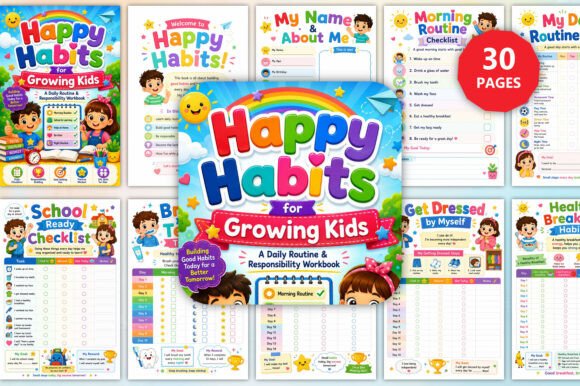
Mornings can be chaotic. The workbook includes guided activities that help children move through getting dressed, eating breakfast, brushing teeth, and preparing for the day without constant adult reminders. The evening section mirrors this with wind-down habits, pajama routines, and preparation for the next day. What makes these sections effective is their sequencing: each step builds on the previous one, creating a logical flow that children can memorize and eventually automate.
Personal Hygiene and Self-Care
Brushing teeth, washing hands, and maintaining cleanliness are often battles. The workbook frames these as personal challenges. For example, a child might track how many days in a row they brush without being reminded, earning small rewards along the way. This gamification works because it gives the child ownership over their own body and habits, rather than making hygiene something a parent imposes.
School Readiness and Organization
Packing a school bag, organizing homework, and remembering assignments are skills that many children struggle with well into elementary school. The Happy Habits for Growing Kids workbook includes pages dedicated to school readiness: checklists for what to pack, prompts for planning homework time, and spaces to reflect on what went well each day. These sections help children develop executive functioning skills in a low-pressure, visual format.
Responsibility at Home
Chores are a common source of friction. Rather than assigning arbitrary tasks, the workbook encourages children to take responsibility for their own space—tidying toys, making their bed, helping with simple household tasks. The key here is consistency over perfection. A child who makes their bed crooked every day but does it without being told has learned more than a child who makes it perfectly once under supervision.
Kindness and Social Behavior
Perhaps the most distinctive feature of this workbook is its focus on positive social habits. Pages prompt children to perform small acts of kindness, share with siblings, use polite words, and help others. These activities are not just moral lessons; they are tracked and celebrated just like brushing teeth or packing a bag. This sends a powerful message: being kind is as important as being organized.
Reading and Learning Habits
The workbook also includes sections that encourage daily reading and curiosity. Children can track books they have read, set reading goals, and reflect on what they learned. For parents who want to cultivate a love of learning, these pages provide a structured yet flexible framework that grows with the child.
How the Workbook Functions as a Complete System
What sets the Happy Habits for Growing Kids Workbook apart from a simple activity book is its systemic design. It is not a collection of random exercises; it is a progression. Children start with simpler habits—like brushing teeth or making their bed—and gradually move toward more complex ones like goal setting and self-reflection. The reward system is built in, so children experience a sense of accomplishment at regular intervals. This keeps motivation high even when interest in a particular habit wanes.
Another critical feature is the goal-setting and progress-tracking pages. These allow children to see their own growth over time. A page that shows a week of completed habits provides visual proof of their effort. For children who struggle with delayed gratification, this immediate feedback loop is essential. It also gives parents a concrete tool for conversations about progress, effort, and improvement.
Practical Considerations for Different Users
While the workbook is designed for children, its effectiveness depends heavily on how adults implement it. Professionals such as pediatric occupational therapists, school counselors, and early childhood educators can use the workbook as a supplemental tool during sessions. The structured activities align well with therapeutic goals around executive function, self-regulation, and social skills. For educators, the workbook can serve as a classroom resource for teaching responsibility and kindness without adding extra planning time.
Parents and caregivers should consider a few practical points before starting. First, the workbook works best when used consistently. Setting aside a few minutes each day to review progress and celebrate wins helps maintain momentum. Second, the reward system should be meaningful to the child—it does not need to be elaborate. Stickers, extra playtime, or a special activity can be enough. Third, flexibility matters. If a child resists a particular habit, it is okay to pause and revisit it later. The goal is not perfection but steady progress.
Creators and business owners in the educational or parenting space may find the workbook a useful reference for designing their own habit-building resources. Its structure offers a blueprint for combining gamification, visual tracking, and developmental appropriateness. Researchers studying child development or habit formation could also use the workbook as a real-world example of applied behavioral principles in a home or school setting.
Observations on Long-Term Impact
One of the most compelling aspects of the Happy Habits for Growing Kids Workbook is its potential for long-term benefits. Children who learn to manage their morning routine, take responsibility for their belongings, and practice kindness consistently are building neural pathways that support self-regulation and empathy. These are not just childhood skills; they are adult competencies. The workbook does not claim to transform a child overnight, but its incremental approach respects the reality that lasting change takes time.
From a usability standpoint, the workbook's colorful and engaging design reduces the resistance many children feel toward structured activities. It feels like play, not work. This is a deliberate and important design choice. When a child opens the workbook and sees bright colors, fun characters, and spaces to fill in their own achievements, they are more likely to engage voluntarily. Voluntary engagement is the bedrock of intrinsic motivation.
Who Benefits Most from This Approach
This workbook is not limited to a specific type of child or family. It works well for children who thrive on routine and visual structure, but it also benefits those who struggle with transitions or need extra support with organization. For children with attention or executive function challenges, the step-by-step breakdown of tasks can reduce overwhelm. For highly energetic children, the gamified elements provide a constructive outlet for their drive. The adaptability of the system means that parents and professionals can tailor the pace and focus areas to fit individual needs.
Business owners and educators looking for a ready-made resource to recommend to families will appreciate that the workbook is both comprehensive and easy to use. It does not require extensive training or additional materials. A child, a parent, and the workbook are sufficient to get started. This low barrier to entry is a significant practical advantage.
Final Thoughts on Using the Workbook Effectively
The true value of the Happy Habits for Growing Kids Workbook lies not in any single page or activity, but in the system it creates. When used consistently, it becomes a shared language between parent and child, a visual record of growth, and a tool for building the kind of inner discipline that serves children throughout their lives. It acknowledges that habits are not born overnight—they are cultivated, one small win at a time. For anyone invested in helping children become more responsible, independent, and kind, this workbook offers a practical, enjoyable, and research-informed path forward.