Seasonal Gardening Planner: A Practical Guide to Growing and Planning Through Every Season
Most gardeners learn by doing. That usually means killing a few plants along the way. I have lost my share of seedlings to late frosts, forgotten to harden off transplants, and stared at a bare patch of soil in April wondering where the time went. What separates a thriving garden from a patch of missed potential is often not skill alone. It is timing, organization, and a system that actually fits into your life.
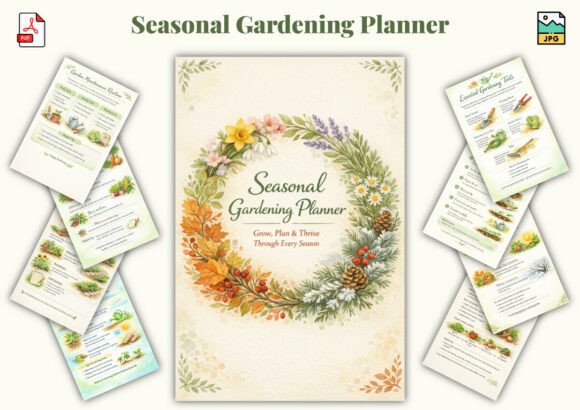
The Seasonal Gardening Planner is a 30-page resource designed to bridge the gap between knowing you should garden and actually keeping up with the rhythm of the seasons. It is a print-ready PDF and a set of high-quality JPG files, sized at 6 by 9 inches for easy handling. It encourages thoughtful tracking rather than frantic guesswork. If you are tired of relying on memory and hoping for the best, this planner gives you a dedicated space to record, reflect, and prepare for what comes next.
Where the Seasonal Gardening Planner Fits Into Real Life
A gardening planner only works if it matches how you actually live and work. The clean, minimal design of this planner avoids overwhelming you with fluff. Instead, it focuses on the sections that matter most: seasonal planting guides, plant care logs, and monthly organization pages. Here is how different people put it to use.
For the Home Gardener Juggling a Full Schedule
You have a job, a family, and a garden that you genuinely care about. But by mid-summer, it is easy to forget which tomato variety resisted blight and which one collapsed. The plant care logs in the Seasonal Gardening Planner let you note these details while they are fresh. When spring rolls around again, you do not waste money or space on varieties that underperformed.
The monthly seasonal organization sections help you break down what actually needs to happen right now. Instead of feeling overwhelmed by the entire growing season, you focus on one month at a time. You know exactly when to start seeds indoors, when to harden off, and when to direct sow. It turns gardening from a reactive chore into a manageable, predictable routine.
For the Content Creator Building an Audience
If you run a blog, YouTube channel, or Instagram account about gardening, timing is everything. Posting a video about pruning tomatoes in August is helpful. Posting it in April is what builds trust. The seasonal planting guides inside this planner double as an editorial calendar for your content.
You can map out your posts around what is actually happening in the garden. When the planner tells you it is time to prepare your winter garden, you already have a draft ready about cold frames and cover crops. Your audience sees you as a reliable source because you are always one step ahead. The portable 6x9 size makes it easy to take notes on the go, whether you are visiting a local nursery or filming in your backyard.
For the Small Business Owner Managing Operations
A nursery owner, landscaper, or farm stand operator deals with more than just plants. You juggle inventory, client schedules, and seasonal staff. The garden planning layout pages in the planner give you a structured way to sketch out new garden designs for clients or track propagation schedules for your stock.
Because the Seasonal Gardening Planner comes as a PDF and JPG, you can print multiple copies for different projects or team members. The compact size fits into a work bag or a clipboard without taking up too much space. It helps you standardize your process, so every client gets the same level of thoughtful planning.
Beyond the Backyard: Unexpected Uses
People often assume a gardening planner is only for people with raised beds and compost bins. In reality, this tool works in many surprising settings.
In the Classroom or Workshop Setting
If you teach a community gardening class, a high school environmental science course, or a workshop on sustainable living, you need a curriculum that follows the seasons. The Seasonal Gardening Planner provides a ready-made framework. You can use the monthly organization sections to structure your lesson plans, and the plant care logs become homework assignments.
The high-quality JPG files make it easy to project pages onto a screen or share them digitally with students. Instead of creating worksheets from scratch, you get a polished, consistent resource that students can take home and actually use in their own gardens.
As a Thoughtful and Practical Gift
Finding a gift for a plant enthusiast can be tricky. You do not want to buy something generic, but you also want it to be useful. The Seasonal Gardening Planner works well for housewarmings, birthdays, or holiday presents. It shows that you understand the recipient's hobby and respect their time.
Pair it with a nice set of pens or a seed packet, and you have a gift that encourages a full season of growth. It is especially valuable for new homeowners who are staring at an empty yard and have no idea where to start. The planner gives them a path forward without being overwhelming.
How Different Users Get Different Value
The same pages work differently depending on your experience level and goals. Here is how a few specific types of users benefit from the same tool.
- The beginner finds direction. A new gardener does not know what they do not know. The prompts inside the planner ask specific questions. What zone are you in? When was your last frost date? By filling out the answers, you learn the fundamentals of garden timing. The clean, minimal design prevents it from feeling like homework.
- The experienced grower finds consistency. Memory is unreliable. A written record of crop rotation, soil amendments, and weather patterns is invaluable. The plant care logs give you a structured way to capture that data, turning a casual hobby into a refined practice that improves every year.
- The digital nomad adapts the format. Not everyone wants a physical notebook. Because the planner comes as JPG and PDF, you can load it into apps like GoodNotes or Notability. Plan your garden on your tablet while traveling or during a lunch break. The flexibility matches how many people manage their lives today.
Practical Considerations Before You Start Planning
Before you download or print the planner, there are a few things to think about. These steps ensure you actually use the planner rather than letting it sit in a drawer.
Know Your Growing Zone and Last Frost Date
The planner provides the structure, but your local climate provides the data. Before you fill out the seasonal planting guides, take a few minutes to look up your USDA hardiness zone. This information determines what you can plant and when. The planner works best when it is informed by your specific reality, not a generic ideal.
Decide How You Will Use It
Will you print it at home, take it to a print shop, or use it digitally? The 6x9 inch size is easy to bind at a local copy center or slip into a three-ring binder. If you prefer a digital workflow, the high-quality JPG files ensure clean lines and crisp text on any screen. Think about your habits and choose the format that makes you most likely to write in it consistently.
Be Honest About Your Space
The garden planning layout pages allow you to draw out your beds and containers. Use them to map sunlight patterns, water access, and proper spacing. It is much better to overestimate spacing on paper than to crowd your plants in the soil. This is where the planner prevents real-world mistakes that cost you time and money.
Building a Habit That Lasts Through Every Season
A planner is just paper until you write in it. The value of the Seasonal Gardening Planner comes from the consistency it encourages. By sitting down once a month to look at the seasonal organization sections, you build a rhythm that pays off in healthier plants and less wasted effort.
You start to notice patterns. You realize that your soil dries out faster in the raised bed by the fence. You remember that the peas did better when planted a week earlier. These observations, tracked over time, turn gardening from a guessing game into a reliable skill.
Whether you are waking up early to water seedlings, writing a blog post about succession planting, or helping a neighbor design their first vegetable bed, having a plan changes the outcome. The Seasonal Gardening Planner is not a promise of a perfect garden. It is a tool for understanding what works in your specific environment, season after season.
And that understanding is what helps you move from wishing you had a green thumb to knowing exactly why your garden thrives.