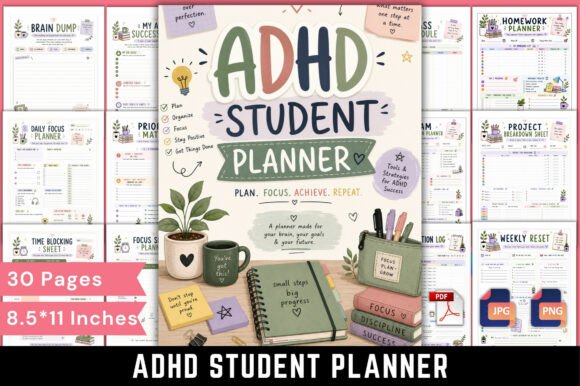
The ADHD Student Planner: A Practical Guide to Focus, Organization, and Academic Success
For students with ADHD, the typical student planner often falls short. Standard planners assume a level of executive function that many neurodivergent students simply do not have. The ADHD Student Planner is a specialized tool built from the ground up to address the unique challenges of attention deficit, procrastination, time blindness, and disorganization. It is not just a calendar or a to-do list. It is a structured planning system designed to support executive function, reduce overwhelm, and build consistent study habits that lead to real academic progress.
Why Standard Planners Fail Students with ADHD
Conventional planners rely on the assumption that a student can estimate time accurately, prioritize tasks independently, and maintain focus long enough to follow through. For students with ADHD, these are not simple tasks. Executive function challenges make it difficult to break down large projects, estimate how long a task will take, resist distractions, and transition between activities. A typical planner page with blank lines and a simple date header offers no structure for these struggles. It becomes another source of frustration rather than a solution.
The ADHD Student Planner is different. It acknowledges that planning is a skill that needs to be taught and practiced, not an innate ability. Every page is designed to guide the student through a process that builds focus, organization, and time management step by step. Instead of assuming the student knows how to plan, the planner provides prompts, checklists, and structured layouts that make the planning process visible and manageable.
The Role of Executive Function in Academic Planning
Executive function refers to the mental skills that help us manage time, pay attention, switch focus, plan and organize, remember details, and regulate emotions. For students with ADHD, these skills are often underdeveloped or inconsistent. An ADHD-friendly planner compensates for this by offering external structure. It acts as a scaffold for executive function, reducing the cognitive load involved in planning and freeing up mental energy for actual studying.
When a student opens the ADHD Student Planner, they are not greeted by a blank page. Instead, they find specific sections for setting daily priorities, breaking down assignments into manageable steps, tracking time spent on tasks, and reflecting on what worked and what did not. This structure removes the guesswork from planning and replaces it with a reliable system.
Core Components of an ADHD-Friendly Academic Planner
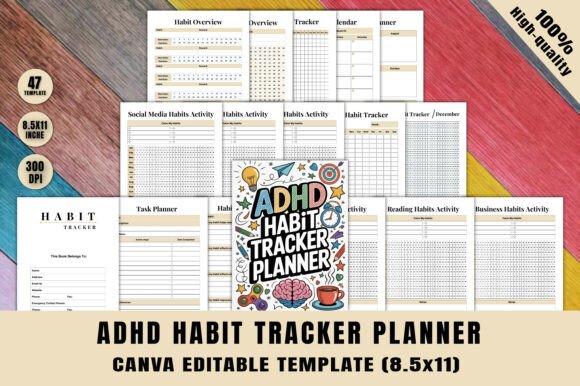
The ADHD Student Planner is packed with features that directly address the most common pain points for students with attention and organization challenges. Each component serves a specific purpose and works together to create a cohesive planning system.
Daily Focus Planning and Time-Blocking
One of the most powerful tools in the planner is the daily focus layout. Instead of listing every task for the day, students are encouraged to identify one or two high-priority tasks that will move the needle academically. This reduces the overwhelm of a long to-do list and helps the student channel their limited attention span into meaningful work.
Time-blocking is integrated directly into the daily pages. Students assign specific time slots for studying, breaks, meals, and other obligations. This technique helps combat time blindness by making the passage of time visible and tangible. Each block is a commitment, and the act of writing it down reinforces the plan in the student's mind.
Assignment Trackers and Study Organizers
Forgetfulness and missed deadlines are common struggles for students with ADHD. The assignment tracker provides a centralized space to record every assignment, its due date, and the steps needed to complete it. This eliminates the chaos of scattered sticky notes, digital reminders, and forgotten emails. The study organizer takes this a step further by helping students break each assignment into smaller, actionable steps. Instead of "write a research paper," the planner prompts the student to list: choose a topic, find three sources, create an outline, write the introduction, and so on. This reduces the intimidation of large projects and makes starting easier.
Procrastination Busters and Motivation Worksheets
Procrastination is not laziness. It is often a response to overwhelm, perfectionism, or difficulty initiating tasks. The planner includes dedicated worksheets that help students identify why they are avoiding a task and what small step they can take to get started. These worksheets are designed to be brief and actionable, not time-consuming in themselves. The goal is to lower the barrier to entry and make the first step feel manageable.
Motivation worksheets include prompts for setting rewards after completing difficult tasks. This taps into the ADHD brain's need for immediate feedback and positive reinforcement. A small reward after a focused study session can make a significant difference in sustaining effort over time.
Goal-Setting Pages and Progress Tracking
Long-term goals are abstract and easily forgotten without a system to track them. The ADHD Student Planner includes pages for setting weekly, monthly, and semester goals. These goals are broken down into smaller milestones that the student can check off as they progress. Progress tracking is not about perfection. It is about building awareness and momentum. When students see that they are moving forward, even slowly, their confidence grows and their motivation stabilizes.
Mood Tracking and Reflection Exercises
Emotional regulation is a critical but often overlooked aspect of academic success. ADHD is frequently accompanied by anxiety, frustration, and low self-esteem, especially when past academic struggles have created negative associations with schoolwork. The planner includes mood tracking features that help students notice patterns in their emotional state. For example, a student might realize that they consistently feel anxious before math class or that they struggle to focus after lunch. Reflection exercises guide students to think about what strategies helped them that day and what they might try differently tomorrow. This builds self-awareness and resilience over time.
Practical Strategies for Using the ADHD Student Planner Effectively
Owning a planner is only the first step. Developing a consistent planning habit is where real transformation happens. The following strategies are designed to help students get the most out of their ADHD Student Planner.
Start Small and Build Consistency
Trying to use every section of the planner from day one can be overwhelming. It is better to start with just two or three pages that feel most helpful. For example, a student might begin by using only the daily focus page and the assignment tracker. Once that becomes a habit, they can add the procrastination buster worksheet or the weekly goal-setting page. Small wins build momentum and prevent the planner itself from becoming another unfinished project.
Integrate Planning into the Daily Routine
Planning should happen at the same time every day. Many students find success by planning the next day in the evening or planning the current day first thing in the morning. The key is to make planning a non-negotiable part of the routine, like brushing teeth or eating breakfast. When planning becomes automatic, it no longer requires the executive function resources that are already in short supply.
Use Visual Cues and Color Coding
The ADHD brain responds well to visual information. Color coding different subjects or types of tasks can make the planner easier to scan and more engaging to use. Stickers, highlighters, and simple symbols can also serve as visual cues that help the student quickly identify priorities, deadlines, and completed tasks. The planner is designed with ADHD-friendly layouts that include plenty of space for these visual elements.
Review and Adjust Regularly
No planner works perfectly forever. Students should review their system at the end of each week and ask themselves what is working and what is not. If a particular page never gets used, it can be skipped or replaced. If a certain time-block keeps failing, the student may need to adjust the duration or the type of task scheduled. The planner is a tool, not a prison. Flexibility is essential.
Who Can Benefit from an ADHD Student Planner?
While this planner is designed specifically for students with ADHD, its structure and features can benefit a much wider audience. Middle school students learning to manage multiple subjects, high school students preparing for college applications, college students balancing coursework and independent study, and homeschool learners who need to create their own structure can all find value in this system. The principles behind the planner—breaking down complexity, making time visible, reducing overwhelm, and building habits—are universal. Anyone who struggles with focus, organization, or procrastination will find support in these pages.
The ADHD Student Planner as a Tool for Self-Advocacy
Beyond academics, the ADHD Student Planner teaches students important life skills. Using the planner consistently helps students understand their own work patterns, recognize their strengths and limitations, and develop strategies that work for their unique brain. This is self-advocacy in practice. Students learn to communicate with teachers and parents about what they need to succeed, whether that is extended deadlines, a quiet workspace, or help breaking down a big project. The planner becomes a bridge between the student's internal experience and the external demands of school.
Common Misunderstandings About ADHD Planning Tools
One common assumption is that if a student uses a planner, they should be able to stay organized perfectly. This misunderstanding can lead to frustration when the planner is not a magic solution. The reality is that planning is a skill that develops over time. There will be days when the planner is ignored, weeks when the system falls apart, and moments when old habits resurface. That is normal. The goal is not perfection but progress. The ADHD Student Planner is designed to meet students where they are and help them take the next step, however small.
Another misunderstanding is that digital planners are inherently better for students with ADHD because they are more accessible and include reminders. While digital tools have their place, many students with ADHD benefit from the tactile experience of writing. The physical act of handwriting a task improves memory and commitment. The ADHD Student Planner leverages this by providing clear, structured pages that are easy to fill out and satisfying to complete.
Building Long-Term Academic Success with the Right System
Academic success for students with ADHD is not about trying harder. It is about using the right tools and strategies consistently. The ADHD Student Planner provides a proven system for managing the chaos that often accompanies attention and executive function challenges. By focusing on daily priorities, breaking down assignments, tracking progress, and reflecting on what works, students can build the skills they need to succeed in school and beyond. This planner is an investment in self-understanding and self-management, and its benefits extend far beyond the classroom.
Whether you are a student struggling to keep up with assignments, a parent looking for a tool to support your child, or an educator seeking resources for neurodivergent learners, the ADHD Student Planner offers a practical, compassionate, and effective approach to academic planning. It is more than a planner. It is a partner in the journey toward focus, organization, and lasting success.