2026–2027 CBT Anxiety Workbook Planner
If you've ever tried to manage anxiety while juggling a packed calendar, you already know the tension between "getting things done" and "staying grounded." The 2026–2027 CBT Anxiety Workbook Planner is a two-year, thoughtfully designed tool that bridges exactly that gap. It's part structured planner, part guided therapy workbook—built to help you organize your daily life while gently training your brain to handle anxious thoughts using Cognitive Behavioral Therapy techniques. This isn't a throwaway notebook. It's a companion for anyone who wants to build calm routines, sharpen emotional awareness, and weave self-care into the fabric of their schedule, not just tack it on as an afterthought.
What Makes This Planner Different
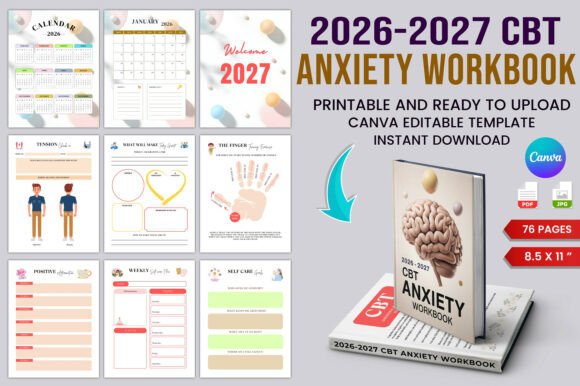
Most planners are all about productivity: deadlines, tasks, appointments. This one keeps those essentials—monthly and weekly planning spreads for 2026 and 2027—but layers in a complete anxiety management system. The visual personality here is warm, approachable, and intentionally uncluttered. Think soft color palettes, generous white space, and a layout that doesn't scream "clinical workbook" or "corporate calendar." Instead, it strikes a balance between professional structure and a gentle, journal-like feel. The typography is clean and readable, with clear hierarchies that separate planning sections from reflection prompts. It feels like something you'd actually want to keep on your desk, not hide in a drawer.
The planner's style is modern but not trendy. It uses a mix of sans serif elements for headers and task lists, with handwritten-style accents for the CBT prompts and affirmation sections. This contrast creates a visual rhythm that separates "planning mode" from "reflection mode" without feeling jarring. The overall appeal is honest and grounded—there's no hype, no "transform your life in 30 days" energy. Just a well-organized space to track your week, plus the tools to understand why certain weeks feel harder than others.
Where This Planner Works Best
The 2026–2027 CBT Anxiety Workbook Planner fits naturally into several contexts. It's ideal for personal use, especially if you're an entrepreneur, freelancer, or creative professional who needs to manage both deadlines and mental bandwidth. Designers, marketers, and small business owners will appreciate the task planning spreads and the monthly goal planner—the same features you'd find in a high-end productivity system. But the workbook also includes tools that are rare in a standard planner: a mood tracker, a DE-catastrophizing exercise, worry coping cards, and a 30-day self-care challenge. That makes it equally valuable for therapists, coaches, or anyone leading wellness groups who wants to recommend a structured, practical resource to clients.
Beyond personal use, this planner works well in coaching programs, therapy practices, and even as part of a workplace wellness initiative. If you're a blogger or content creator focusing on mental health, productivity, or intentional living, this planner could serve as a genuine example of what thoughtful design plus real therapeutic technique looks like. It's also a strong candidate for corporate or small business gifting—especially for teams that talk openly about burnout and want tools that support sustainable work habits.
How It Influences Readability, Consistency, and Engagement
One of the biggest challenges with any planner is sticking with it past January. The 2026–2027 CBT Anxiety Workbook Planner addresses this through design choices that prioritise ease of use. The planning sections use a consistent, predictable layout week after week, so you don't waste mental energy figuring out where to write. The CBT exercises appear at strategic intervals, not crammed onto every page. This prevents overwhelm and respects the fact that some weeks you just need a task list and a breathing exercise, not a full emotional audit.
The readability is helped by a clean type hierarchy. Monthly overviews are distinct from weekly task pages. Reflection prompts like "What Will Make Today Great" and "Bedtime Reflection" are set apart with soft icons or subtle shading, making them easy to find even on a busy day. The "Tension Check-in" and "The Balloon Mental Exercise" are formatted as short, scannable activities—no dense paragraphs, just simple prompts that take two minutes to complete. This micro-interaction approach is key to engagement. It respects that your attention is limited and never asks you to do more than you can handle in a single sitting.
Brand perception also benefits from this design. Whether you're using the planner as a personal tool or recommending it to an audience, the consistent structure signals reliability and care. It doesn't try to be everything at once. It's clearly a CBT-based planner first, with productivity features that support that core purpose. That clarity builds trust, especially for an audience that's already skeptical of quick-fix productivity hacks.
Choosing This Planner for Your Needs
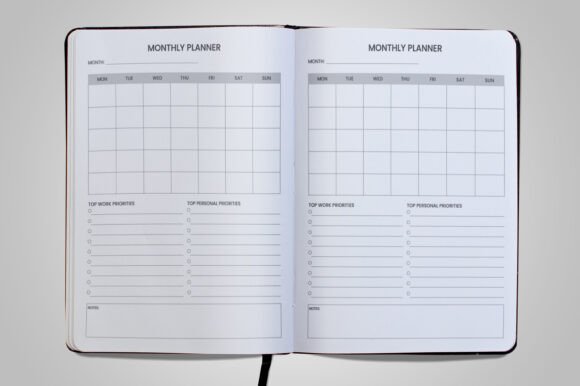
When you're evaluating whether this planner fits your life or your audience's needs, start with the feature set. Look at the structure: does it include enough blank planning space for your workflow? The weekly task planning pages are straightforward and flexible, suitable for both business and personal use. The monthly goal planner and monthly check-in pages give you a higher-level view that's useful for entrepreneurs, marketers, and creatives who think in campaigns and projects rather than daily to-dos.
Now consider the anxiety-management tools. The 2026–2027 CBT Anxiety Workbook Planner includes exercises like "Heart Breathing," "Star Breathing," "The Finger Tracing Exercise," and "I'm Safe In My Body." These are drawn directly from CBT and somatic therapy practices. If you or your audience already have some familiarity with these techniques, the planner serves as a reliable reinforcement tool. If you're new to CBT, the prompts are simple enough to use without a therapist present but structured enough to be effective. The "Weekly Dream Journal" and "Positive Journaling" sections add a reflective layer that complements the more structured CBT exercises.
Another practical consideration is the two-year format. This isn't a flimsy six-month experiment. The 2026–2027 span encourages commitment. You can see patterns across seasons, identify triggers that recur, and track progress on self-care goals over a longer arc. For coaches and therapists, this makes it a more useful documentation tool than a single-year planner.
Testing the Exercises and Planning Flow
Before committing to a full year, try testing a few of the exercises in context. The "DE-catastrophizing" page, for example, walks you through a classic CBT technique for dialing back worst-case-scenario thinking. Pair it with the "Mood Tracker" to see if your emotional patterns align with your catastrophic thoughts. The "Worry Coping Cards" are a practical addition—you can cut them out or keep them in the planner for quick access during stressful moments. I've found that the "Vision Board" and "Monthly Health Check-In" pages are especially useful for entrepreneurs who need to connect personal well-being with business goals without blurring the lines too much.
For publishers, bloggers, and content creators testing this planner for review or recommendation, pay attention to the physical quality. The paper weight, binding, and cover material matter for daily use. The design suggests a lay-flat binding is likely, which is essential for a workbook you'll write in regularly. The cover should withstand being tossed into a bag alongside a laptop and water bottle. These tactile details influence whether someone actually uses the planner or just leaves it on a shelf.
Design Observations and Practical Recommendations
One design choice I appreciate is the inclusion of both "Physical Activities Tracker" and "Medication Tracker." These are often missing from general wellness planners but are critical for anyone managing anxiety holistically. The "Appointment Tracker" is straightforward but necessary—especially if you're seeing a therapist regularly and want to keep all that information in one place alongside your daily schedule.
The 2026–2027 CBT Anxiety Workbook Planner also includes "My Good Habits" and "30 Days Self Care Challenge" sections. These are positioned as optional, not mandatory. That's smart design. It gives you room to engage deeply when you have the energy and to skip when you don't, without guilt. The "Gratitude Bucket" and "Things I Love" pages are lightweight positive psychology exercises that balance the heavier CBT work. You're not just deconstructing anxious thoughts; you're also building a record of what's good, stable, and worth protecting.
For small business owners, I'd recommend using the "Weekly Task Planning" pages for project milestones and the "Monthly Goal Planner" for quarterly objectives. The "Self Care Goals" and "Weekly Self-care Plan" can double as burnout prevention checkpoints. If you're a coach or therapist, the "Worry Coping Cards" and "DE-catastrophizing" exercises are excellent take-home tools that clients can practice between sessions.
Ultimately, this planner works because it doesn't separate "planning" from "mental health." It treats them as the same practice. Every task list exists alongside a breathing exercise. Every goal page includes space to check in with your emotional state. That integration is rare and valuable, especially for adults juggling demanding careers, creative projects, and the ongoing work of staying grounded. If you're looking for a tool that respects both your schedule and your nervous system, the 2026–2027 CBT Anxiety Workbook Planner is a genuinely useful investment.