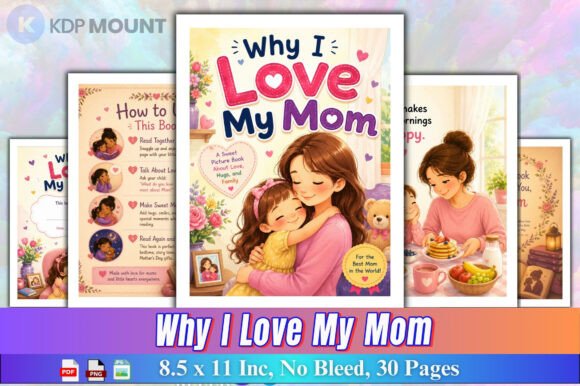
Why I Love My Mom: A Thoughtful Tool for Building Emotional Connection in Children’s Publishing
In the crowded landscape of children’s books, the most enduring titles share a common thread: they articulate universal emotions in a way that feels personal and genuine. Why I Love My Mom is not just another picture book—it is a strategically designed resource that taps into the foundational bond between mother and child. For publishers, educators, and content creators, understanding how to position and use this kind of book can make the difference between a product that collects dust and one that becomes a nightly ritual.
What Makes Why I Love My Mom More Than a Simple Story
At first glance, Why I Love My Mom appears to be a sweet, pastel-colored children’s book with simple text and warm illustrations. But for anyone working in children’s publishing, early childhood education, or family-focused content creation, this book represents a strategic opportunity. Its structure—repetitive, affirming, and emotionally grounded—mirrors what developmental psychologists call “secure attachment language.” Each page reinforces a specific reason for love, from bedtime stories to playful adventures, giving children a vocabulary for their feelings and parents a framework for connection.
The book’s design choices are not arbitrary. The soft pastel palette, large kid-friendly layouts, and easy-to-read text serve a dual purpose: they appeal to young readers’ visual preferences while also meeting the practical needs of parents reading aloud after a long day. The inclusion of a dedication page, a “How to Use This Book” page, and a thank-you ending transforms the reading experience from passive consumption into an interactive ritual. For a publisher or creator, these features signal a product built with intentionality—a book that understands its audience and its context.
Building a Consistent Bedtime Routine
For parents and educators, consistency is key to emotional regulation in young children. Why I Love My Mom supports this goal by offering a predictable narrative structure. Each page follows the same pattern: a simple statement of love paired with a relatable scenario. This repetition is not boring—it is anchoring. Children learn to anticipate the next page, which builds confidence and a sense of security. When used nightly, the book becomes a signal that transition time is coming, helping children wind down with less resistance.
Creating High-Value KDP Products
For self-publishers and KDP entrepreneurs, Why I Love My Mom is a versatile product that can be positioned for multiple niches. The included files—high-quality PDF, PNG, and JPG formats with a trim size of 8.5″ × 11″ no bleed—mean that the barrier to entry is low. But the strategic advantage lies in its specificity. Rather than a generic children’s book, this title targets a clear emotional need: the desire to express love in concrete, memorable ways. This makes it an ideal candidate for Mother’s Day promotions, gift bundles, or subscription box inclusions. The “Belongs To” page and dedication page also allow for personalization, which increases perceived value and reduces the likelihood of returns.
Supporting Social-Emotional Learning in Early Education
Daycare providers, preschool teachers, and homeschool educators can use Why I Love My Mom as a tool for social-emotional learning (SEL). The book models positive attachment language and gives children examples of how to articulate gratitude and affection. After reading, teachers can facilitate discussions or activities—drawing pictures of moments with mom, creating their own “I love my mom because” pages, or even reenacting scenes. This extends the book’s lifespan beyond a single reading and turns it into a curricular resource. For educators seeking to meet SEL benchmarks without adding prep time, this kind of book is a practical shortcut.
Timing Matters: Aligning with Emotional Milestones
The most effective use of Why I Love My Mom is not random. Timing it to coincide with a child’s developmental stage—such as the emergence of separation anxiety around age two or the desire for independence at age four—can amplify its impact. During periods when a child is struggling with transitions or needing extra reassurance, the book’s consistent message of unconditional love provides emotional scaffolding. For parents, reading it during these windows can reduce behavioral outbursts and increase cooperative behavior, not because the book is magical, but because it meets a real psychological need.
Creating a Ritual, Not Just a Reading
One of the most underutilized strategies with books like this is ritual creation. Instead of simply reading the text, parents or educators can use the “How to Use This Book” page as a guide for building a multi-sensory experience. For example, before reading, a parent might light a candle or play soft music. After reading, they can ask the child to point to their favorite illustration and explain why it reminds them of their mom. This transforms a passive activity into an interactive bonding exercise. For publishers, including this guidance in the front matter is a strategic move—it increases engagement and makes the product more “sticky” in a household’s daily routine.
Audience Fit and Age Appropriateness
While Why I Love My Mom is targeted at ages 3–7, the actual sweet spot may be narrower for independent reading. Most three-year-olds will need a caregiver to read aloud, while six- and seven-year-olds may want to read it themselves. However, the simplicity of the text also makes it suitable for emerging readers who are gaining confidence. If you are a publisher or educator, consider pairing this book with a companion activity sheet or a guided reading prompt to extend its utility for older children within the target range. Without this, you risk the book being used only briefly before being outgrown.
The Risk of Emotional Oversaturation
One possible risk of using Why I Love My Mom without clear context is that the message can become background noise. If a child hears the same phrases daily without variation or genuine interaction, the words may lose their emotional weight. This is especially true if the book is used as a substitute for real conversation rather than a springboard for it. The solution is intentional pacing. Use the book two to three times per week rather than every night, and alternate it with other titles that address different emotions or relationships. This keeps the content fresh and the message salient.
Positioning Within a Product Line
For KDP publishers and children’s book creators, Why I Love My Mom works best as part of a thematic series. A companion title such as “Why I Love My Dad” or “Why I Love My Grandma” allows customers to collect and gift multiple books, increasing lifetime customer value. The consistent formatting—8.5″ × 11″ no bleed, pastel illustrations, and simple text—makes it easy to bundle or upsell. Additionally, because the book includes a dedication page and “Belongs To” page, it can be positioned as a customizable gift, which reduces price sensitivity. Parents are more willing to pay a premium for a book that feels personal.
Leveraging the Emotional Hook for Marketing
When marketing Why I Love My Mom, the emotional hook is obvious but underutilized by many publishers. Instead of simply describing the book’s features, consider creating sample spreads that highlight the interplay between text and illustration. For example, an image of a mother and child reading together, paired with the line “I love my mom because she reads me stories,” is instantly relatable. Use this in social media ads, email newsletters, or blog content about building family traditions. The goal is to shift the conversation from “buy this book” to “create this moment.” This aligns with Google’s Helpful Content principles because it provides real value to the reader’s life, not just a sales pitch.
Practical Examples of Intentional Use
A first-grade teacher might use Why I Love My Mom during a unit on family and community. After reading, students create their own class book with pages titled “Why I Love My Family.” The teacher scans the pages and prints a copy for each family, turning a simple story into a year-long keepsake. This extends the book’s impact far beyond a single read-aloud session.
A freelance children’s book illustrator might study the layout and color palette of Why I Love My Mom as a case study in effective design for early readers. The large text, high-contrast illustrations, and limited text per page are not accidental—they are informed by research on visual processing in young children. Understanding these principles can improve the illustrator’s own portfolio and client work.
A small business owner offering personalized gift baskets could include Why I Love My Mom as the centerpiece of a Mother’s Day bundle. Paired with a stuffed animal, a handmade card template, and a coupon for a “mommy date,” the book becomes part of a larger experience. The owner can charge a premium for the bundle while the book itself acts as the emotional anchor that justifies the price.
Long-Term Value: Why This Book Matters Beyond the First Read
The best children’s books are not consumed and discarded—they are returned to, referenced, and remembered. Why I Love My Mom has the structural elements to support this longevity. The dedication page allows it to be personalized, making it a keepsake. The simple language means that even after a child can read it independently, the emotional resonance remains. And because the book focuses on universal experiences—hugs, play, bedtime—it does not feel dated as the child grows. A five-year-old and an eight-year-old may interpret the same page differently, but both can find meaning in it.
For content creators and publishers, this means the book can be marketed not just as a product for a specific age, but as an investment in a child’s emotional vocabulary. That is a message that resonates with parents who are tired of toys that break and apps that distract. A book that helps a child articulate love is not a low-content filler—it is a high-impact tool for family connection.
Final Thoughts on Using Why I Love My Mom Strategically
Whether you are a parent looking for a bedtime staple, an educator seeking SEL resources, or a publisher building a KDP catalog, Why I Love My Mom offers more than meets the eye. Its simplicity is its strength, but only if used with intention. Without a clear goal—whether that goal is emotional regulation, product differentiation, or curriculum support—the book risks being just another cute story. With a thoughtful approach, it becomes a catalyst for connection, creativity, and long-term value.
Take time to consider your context. Ask yourself: What specific outcome do I want this book to support? How does it fit into my existing routines or product lines? What will I do differently because this book is part of the experience? The answers to those questions will determine whether Why I Love My Mom is a fleeting addition or a lasting asset.