From 💖 Digital Self-Care Planner to Strategic Clarity: How a Wellness Journal Can Sharpen Your Focus and Decision-Making
When you hear the phrase "self-care planner," you might picture something purely personal—a private journal for mood tracking and gratitude lists. And yes, the Digital Self-Care Planner does include those elements. But if you are an entrepreneur, creator, marketer, or professional juggling multiple responsibilities, this tool can serve a far more strategic purpose than you might expect. It is not merely a place to log feelings; it is a structured system for reconnecting with your own priorities, clearing mental clutter, and making better decisions under pressure.
Many high-achievers treat self-care as an afterthought—something to address only when burnout forces a pause. That reactive approach carries real costs. Decision quality drops, creativity narrows, and the ability to read a room or a market weakens when you are running on empty. The Digital Self-Care Planner offers a different path: a proactive, daily practice that keeps your internal state aligned with your external goals. Used thoughtfully, it becomes a strategic asset for anyone whose work depends on clarity, adaptability, and sustained performance.
Why a Digital Self-Care Planner Belongs in Your Strategic Toolkit
At first glance, a planner focused on self-love and wellness might seem unrelated to business outcomes. But consider what your work actually demands. Whether you are building a brand, launching a product, managing a team, or creating content, you are constantly making judgment calls. Those calls are shaped by your mental and emotional state. When you are rested, grounded, and self-aware, you see opportunities others miss. When you are depleted, even routine decisions feel heavy.
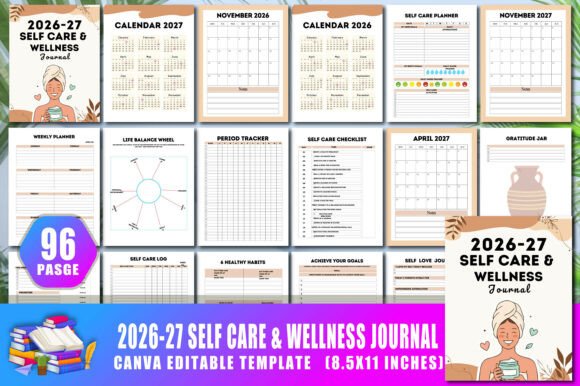
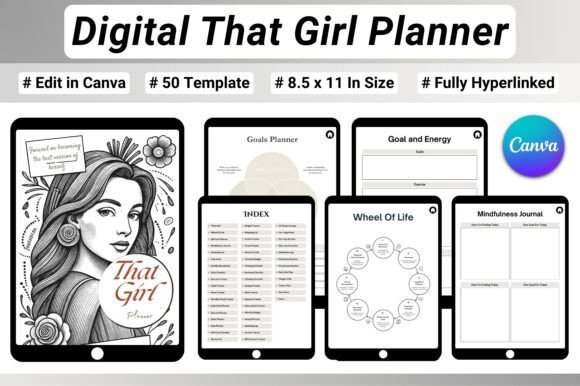
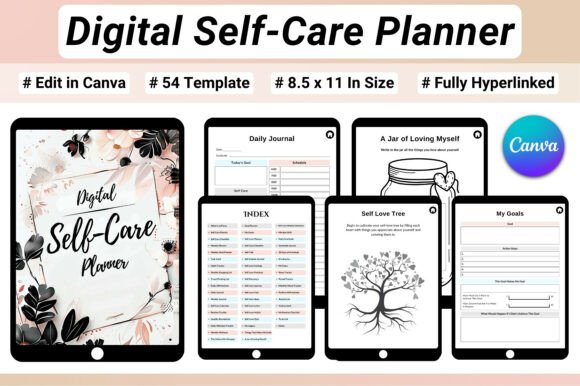
The Digital Self-Care Planner is designed to cultivate that grounded state deliberately. Its hyperlinked navigation means you can move instantly between sections—from a morning routine tracker to a fear-release mindset page to a weekly priority planner—without friction. That speed matters when you have only a few minutes between meetings or creative sessions. The planner does not add to your workload; it streamlines the process of checking in with yourself.
From a positioning perspective, using a structured self-care tool also signals something important to your clients, collaborators, or audience: you operate with intention. People notice when you show up consistently, respond thoughtfully, and maintain your energy over long projects. That reliability builds trust. And trust, in any professional context, is a form of capital.
Aligning Internal State with External Goals
One of the most underrated challenges in any ambitious career is keeping your daily actions aligned with your deeper priorities. It is easy to get pulled into reactive mode—answering emails, putting out fires, chasing short-term metrics—while your long-term vision drifts. The Digital Self-Care Planner helps you catch that drift early.
The daily self-care planner and weekly priority chart are not just organizing tools. They force a simple but powerful question: What truly matters today? When you pair that with the self-love journal prompts and mindset shift pages, you begin to notice patterns. Perhaps you consistently avoid certain tasks because they trigger self-doubt. Or maybe you overcommit because saying no feels uncomfortable. The planner gives you a structured way to surface those patterns and work through them, rather than letting them quietly steer your decisions.
Over time, this practice sharpens your ability to set boundaries, allocate energy wisely, and make trade-offs that serve your actual goals—not just the loudest demand of the moment. For a freelancer, that might mean choosing higher-value projects over constant hustle. For a team leader, it could mean delegating more effectively because you have acknowledged your own limits. For a creator, it might mean protecting your creative time from administrative creep.
Practical Ways to Use the Planner for Better Results
Strategic tools only deliver value when you use them with intention. Here are several practical approaches to integrating the Digital Self-Care Planner into your workflow—not as a "nice to have," but as a decision-making anchor.
Start with the Self-Love Mindset Section Before Planning Your Week
Many professionals jump straight into task lists and calendars without checking their underlying assumptions. That is a recipe for repeating the same unhelpful patterns. Before you map out your week, spend ten minutes with the self-love reflection pages. Ask yourself: What beliefs am I carrying about this project? Where am I being too hard on myself? What would change if I approached this week from a place of sufficiency rather than scarcity?
This is not abstract navel-gazing. It is a practical recalibration. When you surface a limiting belief early—say, "I am not good enough to pitch that client"—you can reframe it before it shapes your behavior. The mindset shift exercises in the planner give you a structured way to do that. The result: you enter your planning time with more accurate self-assessment and better strategy.
Use the Daily Wellness Tracker as a Performance Dashboard
The daily wellness tracker tracks mood, water intake, and energy levels. On its own, that data might seem trivial. But when you review it alongside your task completion and creative output over a few weeks, patterns emerge. You may discover that your best strategic thinking happens on days when you slept well and had a calm morning. You may notice that low-energy afternoons coincide with skipped hydration or back-to-back meetings.
Armed with that insight, you can redesign your schedule. Schedule high-cognitive work for your peak hours. Protect those blocks ruthlessly. Use the routine tracker to build a morning and evening routine that supports your performance rather than draining it. The planner becomes a feedback loop, not a passive log.
Leverage the Mental Wellness Pages for Resilience Under Pressure
High-stakes projects inevitably bring stress. The "What makes me unhappy" reflection and fear-release mindset pages are not about wallowing. They are about identifying the specific triggers that derail your focus. When you know exactly what tends to knock you off balance—a certain type of client feedback, a looming deadline, a comparison to a competitor—you can prepare for it.
Documenting those triggers in the planner and then working through the healthy boundaries worksheet gives you a clear action plan. You might decide to set a communication boundary, adjust your timeline expectations, or create a pre-meeting grounding ritual. The planner does not remove the stress, but it removes the chaos of not knowing how to respond to it.
When and How to Approach the Planner for Maximum Impact
The Digital Self-Care Planner is flexible by design. You can use it daily, weekly, or as needed. But to get the most strategic value, consider these usage patterns.
Daily Check-Ins During Transitional Moments
The best times to use the planner are during natural transitions—morning before work, after lunch, or at the end of the day. A five-minute check-in with the daily self-care planner and wellness tracker can reset your focus. If you are feeling scattered, the simple act of rating your mood and energy can bring clarity. You might realize you are not actually overwhelmed; you are just hungry or tired. That awareness alone prevents poor decisions.
Weekly Reviews to Audit Your Alignment
Reserve thirty minutes each week for the weekly journal review and self-care calendar. Look back at what you accomplished, how you felt, and where you deviated from your priorities. Ask: Did I spend my energy on what actually matters? Where did I let urgency override importance? What needs adjustment next week? This is where the planner shifts from a recording tool to a strategic planning instrument.
Deep Dives During Major Decisions or Transitions
Before launching a new product, accepting a major client, or restructuring your workflow, dedicate an hour to the self-love journey discovery pages and emotional awareness prompts. Major decisions often activate old fears or ingrained patterns that are not immediately obvious. The planner gives you a contained space to examine those reactions before they influence your choices. You may uncover that your hesitation about a new direction is actually about a past failure that has no bearing on the current opportunity. That insight alone can save you months of indecision.
Risks of Using the Planner Without Clear Intent
Any tool can be misused, and the Digital Self-Care Planner is no exception. The most common risk is treating it as a passive journal—filling in mood trackers and checklists without ever acting on the insights. Data without action is clutter. If you track your mood daily but never adjust your schedule, boundaries, or habits, the planner becomes an expensive diary rather than a decision-making aid.
Another risk is over-focusing on the "self-love" aspect while ignoring the planning and accountability sections. Self-awareness without structure can lead to rumination. The planner is most powerful when you use the self-reflection pages to inform the practical pages—the weekly priorities, task charts, and routine trackers. Insight should lead to action.
Finally, avoid the trap of perfectionism. You do not need to complete every page every day. The hyperlinked navigation makes it easy to jump to exactly what you need in the moment. Use the planner as a flexible tool, not a rigid obligation. The goal is not a perfectly filled journal; it is a clearer mind and better decisions.
Using the Planner Intentionally: A Decision-Making Framework
To extract lasting value from the Digital Self-Care Planner, approach it as a system for continuous reconnection—with yourself, your goals, and your current reality. Here is a simple framework to guide your use.
- Collect data. Use the daily trackers and journals to gather honest information about your state, habits, and patterns. No judgment, just observation.
- Interpret patterns. During weekly reviews, look for correlations between your wellness data and your productivity, creativity, or decision quality. Ask what those patterns suggest about your environment, routines, or beliefs.
- Decide on one adjustment. Choose a single change to test in the coming week. It could be a new morning routine, a boundary with a client, or a mindset shift you want to practice.
- Experiment and observe. Implement the change without forcing results. Use the planner to track how it feels and what shifts.
- Refine. After a week, review the outcome. Keep what works, discard what does not, and choose the next adjustment.
This cycle turns the planner into a personal research and development tool. Over months, the small adjustments compound. You build not just healthier habits, but a more intentional approach to your work and life.
Long-Term Value: Why This Investment Pays Off
For entrepreneurs, creators, and professionals, the most valuable asset is not your network, your skills, or your brand—it is your ability to show up consistently with clarity and energy. That capacity is built, not given. The Digital Self-Care Planner provides a structured way to build it every day.
The self-care calendar and weekly planner help you guard your time against mission creep. The gratitude and emotional awareness pages keep you connected to what actually motivates you, rather than what you think you should want. The hyperlinked navigation ensures that no matter how busy you are, you can find the specific page you need in seconds. It is designed for the reality of a full, demanding life, not a fantasy of unlimited leisure.
Over the long term, the planner trains you to treat yourself as a system worth maintaining. That shift in perspective changes how you approach every project, partnership, and goal. You stop treating self-care as a break from your real work and start treating it as a foundation for everything you build.
If you are ready to stop running on autopilot and start making decisions from a place of intention, the Digital Self-Care Planner is not just a journal. It is a strategic practice. Use it consistently, use it honestly, and let it guide you back to what matters.