The Horse Care Training Journal: Your Complete System for Health, Training, and Daily Management
Every horse owner knows the feeling — there is always something to remember, something to track, and something to plan. From feeding schedules and vet visits to training progress and daily grooming, caring for a horse involves a surprising amount of information. Without a reliable way to organize it all, important details can slip through the cracks. That’s where a dedicated Horse Care Training Journal becomes an essential tool. It is not just a notebook for jotting down reminders. It is a complete, structured system designed to help horse owners, riders, and trainers track care, monitor health, and improve training performance in a consistent, organized way.
In this article, we’ll explore what a Horse Care Training Journal is, why it matters, how it works in practice, and how it can transform the way you care for and train your horse. Whether you are a first-time owner or an experienced trainer, understanding the full potential of this tool can make a genuine difference in your daily routine and long-term success.
What Is a Horse Care Training Journal?
A Horse Care Training Journal is a specialized journal that combines health tracking, daily care checklists, feeding plans, training logs, goal setting, and performance monitoring into one organized resource. Think of it as a centralized hub for everything related to your horse’s well-being and development. Instead of relying on memory, sticky notes, or scattered documents, you have a single place to record, review, and plan.
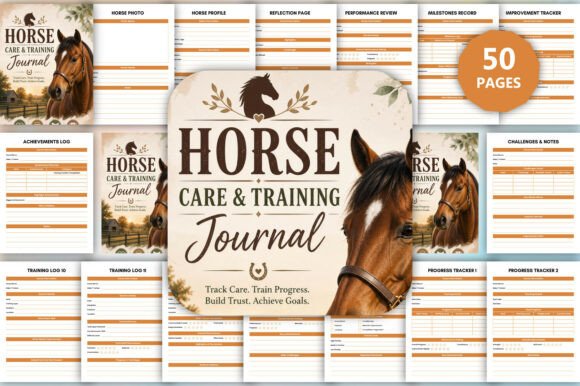
This journal typically includes structured pages for each key area: horse profile information, medical history, nutrition planning, daily care routines, training session logs, goal tracking, performance progress, achievements, and even challenges and improvement plans. The goal is to help you stay consistent, identify patterns, and make informed decisions about your horse’s care and training over time.
Critically, this is not a generic notebook. It is a complete horse management system that guides you through the process of recording and reflecting on the aspects of horse care that truly matter.
Why a Structured Journal Matters for Horse Care and Training
Horse care is full of complexity. Each horse has unique needs based on age, health status, workload, temperament, and goals. Without a structured way to track all these variables, it is easy to overlook subtle changes that could signal a health issue or a training plateau. A journal helps you build a long-term picture of your horse’s patterns — from appetite and energy levels to performance trends and behavioral changes.
Beyond health, training consistency is one of the biggest factors in a horse’s progress. By logging each session, you can see what worked, what didn’t, and how your horse responded over time. This kind of record-keeping turns guesswork into evidence-based decisions. It also helps trainers and riders communicate more effectively with veterinarians, farriers, and other professionals by providing clear, detailed information when it matters most.
Key Features of the Horse Care Training Journal
Let’s walk through the key features that make this journal such a powerful tool. Each section serves a specific purpose and works together to create a comprehensive view of your horse’s life.
Horse Profile Information
This section captures the basics — owner information, horse name, breed, age, color, markings, and identification details like microchip or registration numbers. It may also include emergency contacts, insurance information, and a photo. Having this information readily accessible can be invaluable, especially in urgent situations or when others need to care for your horse.
Health Medical Tracking
Health tracking is at the heart of responsible horse ownership. The journal provides dedicated pages for recording vital signs, health status, vaccinations, deworming schedules, vet visits, medications, and any ongoing conditions. By keeping a chronological record, you can easily spot changes or patterns. For example, you might notice that your horse’s resting heart rate tends to be higher during certain seasons, or that a particular vaccine consistently causes a mild reaction. This data empowers you to make proactive decisions.
Feeding Nutrition Planning
Nutrition is another area where consistency matters. The feeding section lets you plan daily rations, track supplements, monitor changes in weight or body condition, and note any dietary issues. Whether you are managing a performance horse, a senior horse, or a growing foal, having a written feeding plan helps ensure nutritional needs are met and adjustments are intentional.
Daily Care Checklist
Daily routines — grooming, stall cleaning, turnout, hoof care, and general observation — form the backbone of good horse care. The checklist section helps you stay on top of these tasks while also providing a place to note anything unusual. Over time, this builds a habit of thorough, consistent care.
Training Logs Sessions
Training logs are where the journal becomes especially powerful for riders and trainers. Each session can be recorded in detail: the date, duration, type of exercise, goals for the session, how the horse responded, and any feedback or adjustments. This turns every ride into a learning opportunity and helps you build a clear picture of progress over weeks and months.
Training Goals Progress
Goal setting is essential for meaningful progress. The journal includes space for both short-term goals (like improving a specific transition or gait) and long-term objectives (like preparing for a competition or developing a young horse). By revisiting goals regularly, you can stay focused and measure progress in concrete terms.
Performance Progress Tracking
This section allows you to monitor skill development, consistency, and overall performance over time. You can track specific metrics like jump heights, dressage scores, trail riding endurance, or behavioral calmness. Seeing improvement on paper can be incredibly motivating for both horse and rider.
Achievements Milestones
Horse ownership is full of proud moments — from the first clear round to a calm trail ride after months of work. Recording these achievements and milestones helps celebrate your horse’s growth and your partnership. It’s a reminder of how far you’ve come, especially during challenging periods.
Challenges Improvement Tracking
No journey is without obstacles. This section helps you identify challenges — whether they are behavioral, health-related, or training-specific — and create structured improvement plans. By documenting the issue, the steps taken, and the outcomes, you build a problem-solving toolkit that you can apply to future situations.
How the Journal Fits Into Modern Horse Care
Modern horse care is increasingly informed by data and routine. While technology offers apps and digital tools for tracking, many owners still prefer the tactile, flexible nature of a physical journal. The Horse Care Training Journal combines the best of both worlds by offering a printed, organized format that can be taken to the barn, the riding ring, or the vet clinic. It does not rely on internet access or battery life, and it allows for natural note-taking and reflection.
That said, the journal also fits seamlessly into a digital lifestyle. Many versions include an editable Canva link, allowing users to customize pages or print fresh copies as needed. PDF files are high-quality and upload-ready, so you can keep a digital backup or print on demand. This hybrid approach — physical journal with digital flexibility — makes it practical for a wide range of users.
Practical Relevance for Owners, Riders, and Trainers
Who benefits most from a Horse Care Training Journal? The short answer is almost anyone involved in horse care. For horse owners, it provides peace of mind and a structured way to manage daily tasks. For riders, it turns each ride into a learning experience and helps track progress toward goals. For trainers, it offers a clear record of each horse’s journey, making it easier to communicate with owners and adjust training plans based on real data.
Even for boarding barns or lesson programs, a journal like this can standardize care practices and ensure nothing is missed. When multiple people care for the same horse, having a written log reduces miscommunication and builds accountability.
Common Misunderstandings About Horse Care Journals
Some people assume that keeping a journal is time-consuming or only for obsessive record-keepers. In reality, a well-designed journal saves time by organizing information in one place and making it easy to review. You do not need to write lengthy entries — short notes and checkboxes are often enough to build a valuable record over time.
Another misunderstanding is that a journal is only useful for competition horses. In truth, every horse benefits from consistent care and tracking. Whether your horse is a backyard companion, a trail partner, or a competitive athlete, the principles of health monitoring, feeding consistency, and thoughtful training apply equally.
Finally, some think that a journal replaces professional advice. It does not. Instead, it complements veterinary care, farrier visits, and training guidance by providing detailed information that helps professionals make better recommendations.
Getting Started with Your Horse Care Training Journal
Starting a new journal can feel a bit daunting at first, but it does not have to be. Begin by filling out the horse profile section with the basic information you already know. Then, for the next week, commit to using the daily care checklist each day. As you get comfortable, start adding health observations and training session notes. Over time, the journal becomes a natural part of your routine.
Set aside a few minutes each week to review your entries. Look for patterns — maybe your horse is always more relaxed after a certain type of exercise, or perhaps a particular supplement correlates with better coat condition. These insights are the real value of journaling.
If you are using the editable Canva link, you can customize sections to fit your specific needs. Maybe you want to add a page for hoof care notes or a section for seasonal considerations. The flexibility means the journal grows with you.
Conclusion
The Horse Care Training Journal is more than a notebook. It is a complete system for managing the many facets of horse care and training in a structured, consistent, and thoughtful way. By combining health tracking, feeding plans, daily checklists, training logs, goal setting, performance monitoring, and improvement planning, it empowers owners, riders, and trainers to build a stronger connection with their horses and make informed decisions based on real data.
Whether you are just starting out or have years of experience, a dedicated journal helps you stay organized, celebrate progress, and navigate challenges with clarity. In a world where horse care demands attention to detail, having a reliable system can make all the difference.