Burnout Recovery Workbook: A Practical Guide to Reclaiming Balance
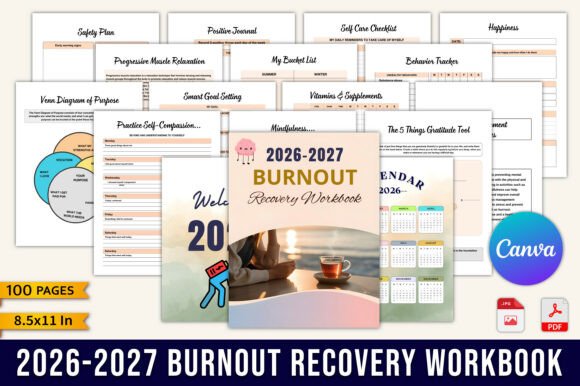
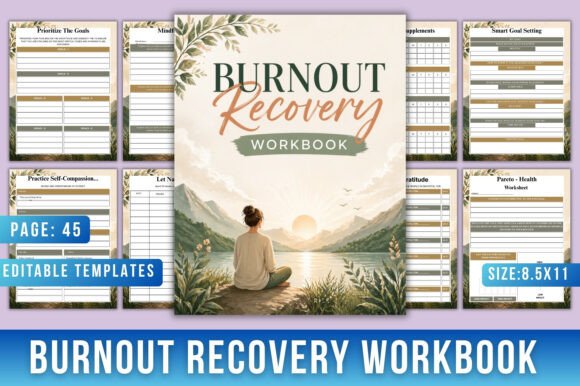
When stress becomes your constant companion and motivation feels like a distant memory, burnout has already taken root. The Burnout Recovery Workbook steps in as a thoughtfully designed, calming printable journal created to help you manage stress, improve self-awareness, and support your mental wellness journey. With structured worksheets and guided pages, this workbook makes it easier to reflect, track your habits, and build a balanced lifestyle. It does not promise instant fixes, but offers a steady path toward understanding what drains you and what restores you.
The workbook approaches burnout recovery from multiple angles. It includes a Nature Daily Feeling Tracker that encourages you to spend time outside and track your daily feelings through morning and evening reflections, a Goal Review Progress Tracker to set your goals and monitor weekly progress with built-in reward sections, and worksheets to identify your Core Values and Life Purpose. There are also daily prompts for Self Compassion Practice, exercises to uncover your Strengths and Positive Qualities, Mindfulness Worksheets for daily, weekly, and monthly practice, a Life Balance Self Awareness section covering physical health, mental health, and relationships, Breathing Relaxation Exercises including triangle breathing, and deep Self Assessment Reflection prompts to help you understand your thoughts, habits, fears, and motivations. All of these elements work together to create a complete toolkit for recovery.
Why Burnout Recovery Matters Across Different Audiences
Burnout does not discriminate. It affects the professional juggling deadlines, the creator managing multiple platforms, the educator supporting students, the freelancer handling their own business operations, and the hobbyist who has lost the joy in what they once loved. The Burnout Recovery Workbook resonates differently depending on your situation, but the core need remains the same: a reliable, structured way to step back and recalibrate.
For beginners new to self-reflection or mental wellness tools, the workbook serves as a gentle introduction. The guided prompts remove the guesswork of where to start. Instead of staring at a blank page wondering what to journal about, you find specific questions like “What felt good today?” and “What drained my energy this morning?” The Nature Daily Feeling Tracker offers a simple two-point check-in each day, making it easy to build a consistent habit without feeling overwhelmed. Beginners often prioritize ease of use above all else, and this workbook delivers that with clear instructions and structured layouts.
Experienced users who have tried other journals or self-help methods will appreciate the depth and variety. The Core Values Life Purpose section, for example, goes beyond surface-level prompts. It asks you to rank values, reflect on misalignment in your current life, and map out actionable steps toward living more authentically. The Self Assessment Reflection prompts dig into fears, motivations, and recurring thought patterns, offering a level of introspection that more advanced users seek. For this group, flexibility and depth matter more than simplicity, and the workbook balances both.
For Creators, Professionals, and Entrepreneurs
Creators such as writers, designers, photographers, and content producers often operate in cycles of high creative output followed by periods of exhaustion. The Burnout Recovery Workbook helps identify when that cycle is tipping into burnout. The Mindfulness Worksheets encourage daily grounding practices that can prevent the frantic scramble to produce. A creator might use the Goal Review Progress Tracker not for rigid productivity goals, but to set creative intentions for the week—like “finish three rough drafts” or “spend one hour sketching without judgment”—and then reward themselves after completion. This shifts the focus from output to sustainable creativity.
Professionals and entrepreneurs face a different flavor of burnout. The pressure to perform, lead teams, meet revenue targets, or constantly optimize can erode well-being quietly over months. For them, the Life Balance Self Awareness section becomes a practical tool. It asks you to rate your physical health, mental health, relationships, and overall life balance on a scale, then identify which area is most neglected. An entrepreneur might discover they have been neglecting physical health while overworking, and the workbook can prompt them to schedule movement or rest as a non-negotiable task. The Breathing Relaxation Exercises, especially the triangle breathing technique, offer a quick reset between meetings or before high-stakes decisions. Professionals often evaluate tools based on time efficiency and reliability. The workbook respects that by offering exercises that take five minutes or less.
For Educators, Marketers, Bloggers, and Freelancers
Educators carry the emotional weight of supporting students while managing their own stress. The Self Compassion Practice daily prompts are particularly valuable here. A teacher who ends the day feeling they did not do enough can use the prompt “Name one moment today you showed kindness” to reframe their perspective. Educators tend to value learning value and long-term usefulness, and the workbook’s repeatable structure means it can be used across different school terms or personal growth phases.
Marketers and bloggers often track metrics, engagement, and deadlines obsessively. The Burnout Recovery Workbook offers a counterbalance by tracking internal states rather than external validation. The Nature Daily Feeling Tracker encourages stepping away from the screen, which is especially relevant for those whose work is entirely digital. A blogger might pair the workbook with their morning routine, using the gratitude prompts to shift focus from “what performed well yesterday” to “what felt meaningful today.” For this audience, the workbook’s printable PDF format offers speed and accessibility—download it, print the pages you need, and start immediately without waiting for shipping.
Freelancers and small business owners wear many hats and often struggle with setting boundaries. The Core Values Life Purpose section helps them clarify what matters most, which in turn guides decisions about which projects to take on. A freelancer might realize that “autonomy” and “creativity” rank higher than “financial security” in their value hierarchy, leading them to choose clients who offer creative freedom over those who offer the highest pay. The workbook’s Self Assessment Reflection prompts also help identify fears that hold freelancers back, such as imposter syndrome or fear of saying no to work.
For Consumers and Hobbyists Seeking Balance
Consumers looking for a mental wellness tool often compare cost, quality, and presentation. The Burnout Recovery Workbook is a printable product, which keeps the price low compared to physical journals while offering the same quality of content. The design is calming and visually clean, with enough structure to feel professional but not so much that it feels clinical. Consumers who value aesthetics will appreciate the thoughtful layout, while those focused on substance will find the worksheets substantive and practical.
Hobbyists who enjoy activities like gardening, painting, hiking, or crafting may use the workbook to reconnect with the joy of their hobbies. The Excellent Strengths Positive Qualities section helps them recognize that their hobby is not just a pastime but a source of strength and identity. A hobbyist who feels guilty for spending time on their craft instead of working can use the workbook to reframe that time as essential self-care. The Purpose… section invites them to consider how their hobby contributes to their overall life direction, whether it fosters connection, creativity, or peace.
Practical Considerations for Choosing This Workbook
Before you commit, it helps to ask what you need most from a burnout recovery tool. If your priority is ease of use, the workbook offers simple daily check-ins and guided prompts that require no previous journaling experience. If cost is a concern, the printable format eliminates shipping fees and allows you to print only the pages you use most. If quality and presentation matter, the design is clean, calming, and intentionally uncluttered so that the content does not feel overwhelming.
For readers who value flexibility, the workbook can be used in any order. You might start with the Breathing Relaxation Exercises on a high-stress day, then move to the Life Balance Self Awareness section when you have more time for reflection. The Mindfulness Worksheets include daily, weekly, and monthly options, so you can adapt the practice to your schedule. For those concerned about long-term usefulness, the workbook is designed to be revisited. As your goals and challenges evolve, the prompts reveal new insights. A goal you set in one month may shift the next, and the workbook accommodates that without feeling repetitive.
Commercial value is another angle for small business owners or creators who purchase resources to share with teams or clients. The workbook can be used as a coaching tool, a team wellness resource, or a supplement to therapy. Its structured format makes it easy to assign specific worksheets for group reflection or one-on-one discussions.
Does the Burnout Recovery Workbook Match Your Goals?
If you are someone who benefits from clear structure but also wants room for personal exploration, this workbook fits well. It is not a rigid program that demands you follow a specific order, but it is organized enough that you never feel lost. If you have struggled to maintain a journaling habit in the past, the guided prompts remove the friction of deciding what to write. If you are further along in your wellness journey and need deeper reflection tools, the Self Assessment Reflection and Core Values sections provide that depth.
On the other hand, if you prefer completely unstructured journaling or feel constrained by worksheets, this approach may feel too guided for your taste. The workbook works best for people who want a balance between direction and freedom—someone who wants to be pointed toward meaningful questions without being told exactly how to answer them.
The Burnout Recovery Workbook also suits people at different stages of burnout recovery. If you are in the thick of exhaustion, the Nature Daily Feeling Tracker and Breathing Relaxation Exercises offer immediate, low-effort relief. If you are further along and rebuilding your life structure, the Goal Review Progress Tracker and Life Balance Self Awareness sections help you create sustainable habits and monitor your progress over weeks and months.
A Practical Companion for Real Life
What makes the Burnout Recovery Workbook stand out is that it treats recovery as a skill, not a destination. The worksheets do not promise that you will feel better overnight, but they give you a reliable process to check in with yourself, notice patterns, and make small adjustments. The triangle breathing exercise, for instance, is a simple technique you can use anywhere—at your desk, in the car before a difficult conversation, or at night when your mind is racing. The Strengths Positive Qualities section helps you build a more balanced self-view, especially when burnout has convinced you that you are failing at everything.
For a freelancer, the workbook might become a weekly ritual that protects them from overwork. For a teacher, it might be a daily anchor that reminds them why they chose their profession. For a creator, it might be the tool that helps them separate their identity from their output. And for someone new to self-care, it might be the first step toward recognizing that their well-being deserves the same attention as their to-do list.
Recovery from burnout is not linear, and no single tool can fix it entirely. But having a structured, compassionate, and flexible resource to return to, week after week, makes the process less isolating. The Burnout Recovery Workbook offers that support without pressure, letting you work through it at your own pace and in your own way. Whether you are looking for quick stress relief or a long-term practice in self-awareness, it provides a reliable framework to help you find your balance again.