The 2027 ADHD Productivity Journal KDP: A Structured Approach to Managing Executive Dysfunction
For individuals navigating attention deficit hyperactivity disorder, traditional planners often fall short. The rigid layouts, overwhelming detail, and lack of flexibility can exacerbate feelings of frustration rather than alleviate them. The 2027 ADHD Productivity Journal KDP offers a fundamentally different solution—one built on the understanding that executive dysfunction requires not just organization, but a system that works with the brain rather than against it. This fully editable Canva template provides a framework that balances structure with adaptability, making it a practical tool for professionals, students, creators, and anyone seeking to reclaim control over their daily workflow.
Understanding Executive Dysfunction and the Need for Specialized Planning
ADHD is not simply a matter of being easily distracted. It involves challenges with working memory, task initiation, prioritization, and emotional regulation. A standard daily planner assumes a neurotypical ability to estimate time accurately, remember deadlines, and transition smoothly between activities. The 2027 ADHD Productivity Journal KDP directly addresses these pain points by incorporating multiple types of capture pages—morning mind dumps, midday mind sweeps, and evening reflection dumps—that mirror the natural ebb and flow of ADHD attention patterns. This approach reduces the cognitive load of having to hold everything in the mind at once, which is often where overwhelm begins.
Many adults with ADHD describe their inner experience as having several browser tabs open at all times, each playing a different video. The journal's design acknowledges this reality. Instead of forcing a linear, one-task-after-another structure, it provides dedicated spaces for externalizing thoughts before attempting to organize them. This process of externalization—getting thoughts onto paper—is a well-documented strategy for calming the ADHD brain and making prioritization possible.
How the 2027 ADHD Productivity Journal KDP Reduces Mental Clutter
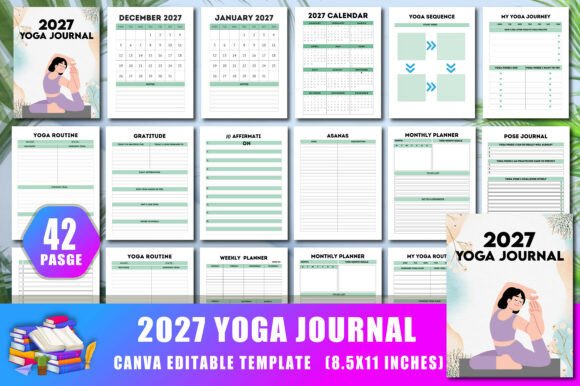
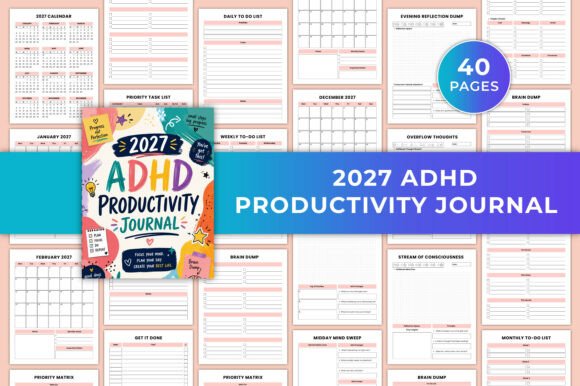
The journal features a 2027 calendar with monthly planning pages, but its real power lies in the specialized worksheets that surround the calendar. The brain dump worksheets and stream-of-consciousness pages act as a pressure-release valve. When a user feels overwhelmed by competing tasks, they can turn to these pages and let the thoughts flow without judgment. This is not a productivity hack in the traditional sense; it is a cognitive strategy that prevents task paralysis.
After the initial dump, the priority matrix task list helps users categorize what is truly urgent versus what only feels urgent. This two-step process—first capture, then categorize—mirrors the Getting Things Done methodology but tailors it specifically for ADHD brains. The priority matrix uses the Eisenhower classification system, but the layout is simplified and visually clean to avoid sensory overload. Each quadrant is clearly delineated, and the design uses ample white space so that users are not visually bombarded when trying to focus.
The Morning Mind Dump: Setting the Intention
The morning mind dump page is designed to be the first thing the user opens each day. It is not a to-do list; it is a complete download of whatever is floating in consciousness. This might include worries about an upcoming meeting, a creative idea, a chore that was forgotten, or a vague sense of anxiety. By getting these items out of the mind and onto paper before engaging with the day's tasks, the journal helps prevent the mid-morning derailing that often occurs when a random thought hijacks attention. The 2027 ADHD Productivity Journal KDP treats this morning ritual as a non-negotiable foundation for the entire day's productivity.
Midday Mind Sweep and Evening Reflection Dump
ADHD brains often accumulate mental friction throughout the day. The midday mind sweep acts as a reset button. Even five minutes spent jotting down accumulated thoughts can dramatically improve afternoon focus. The evening reflection dump serves a different purpose: it allows the user to offload residual mental energy before sleep, reducing bedtime rumination. These three capture points—morning, midday, and evening—create a rhythm that supports the circadian fluctuations in attention that many adults with ADHD experience. The journal does not demand perfection; it simply provides the containers for the cognitive noise.
Customization Through Canva: Tailoring the Journal to Individual Needs
One of the most significant advantages of the 2027 ADHD Productivity Journal KDP being a fully editable Canva template is the ability to customize every element. ADHD is highly individual. What works for one person may be visually distracting for another. Some users need larger font sizes to maintain focus; others need high-contrast color schemes to stay engaged. The template allows changing fonts, colors, layout spacing, and even the order of pages. This level of customization transforms the journal from a generic product into a personal tool that fits the user's specific sensory and cognitive preferences.
Creators who purchase the template for resale or personal use can also adapt it for different niches. A therapist might want to add prompts about emotional regulation. A college student might want to include assignment trackers. A freelancer might prioritize the project-based priority matrix over the daily to-do list. The editable nature of the template means that no two copies of the 2027 ADHD Productivity Journal KDP need to look the same, which is exactly the point—productivity tools must be personalized to be effective for ADHD brains.
Practical Applications for Different User Groups
While the journal is marketed broadly, its real-world applications vary significantly across different user types. Understanding these use cases helps potential buyers determine if the tool aligns with their specific context.
Professionals in High-Demand Roles
For executives, project managers, and knowledge workers, the priority matrix task lists and weekly to-do lists are essential. These users often face multiple competing priorities and can easily fall into the trap of working on what is urgent rather than what is important. The journal's emphasis on reflection—especially the evening dump—helps these professionals detach from work mode at the end of the day. The 2027 ADHD Productivity Journal KDP becomes a boundary-setting tool as much as a planning tool.
Entrepreneurs and Freelancers
Self-employed individuals with ADHD often struggle with the lack of external structure. The monthly planning pages and important notes sections provide a simple project management system that does not require learning complex software. The stream-of-consciousness pages are particularly valuable for creative entrepreneurs who need to capture ideas as they arise without disrupting their current task flow. The journal allows them to park ideas for later review, reducing the fear of forgetting that can drive frantic multitasking.
Students and Researchers
Academic work requires sustained attention across long timelines. The 2027 ADHD Productivity Journal KDP helps students break down large assignments using the priority matrix and morning mind dumps. The daily to-do lists can be used to set small, achievable daily goals for thesis work or exam preparation. The important notes pages serve as a catch-all for lecture insights, reading notes, and administrative reminders that often get lost in the chaos of academic life.
Creators and Hobbyists
Writers, artists, and makers often have nonlinear workflows that do not fit neatly into time blocks. The stream-of-consciousness pages are a natural fit for brainstorming sessions. The brain dump worksheets can be used to explore project ideas without the pressure of committing to a specific outcome. The key advantage for this group is that the journal does not force productivity in a rigid sense; it allows creative exploration while still providing enough structure to move projects forward over time.
Design Considerations for ADHD-Friendly Layouts
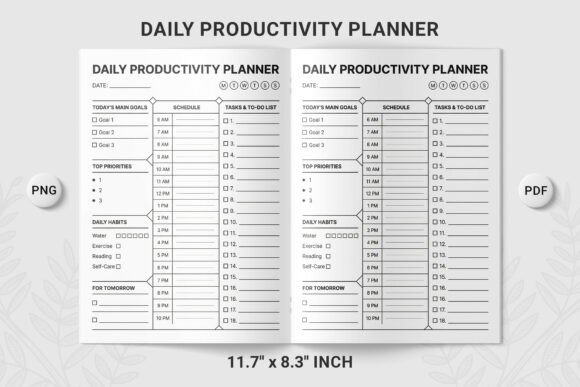
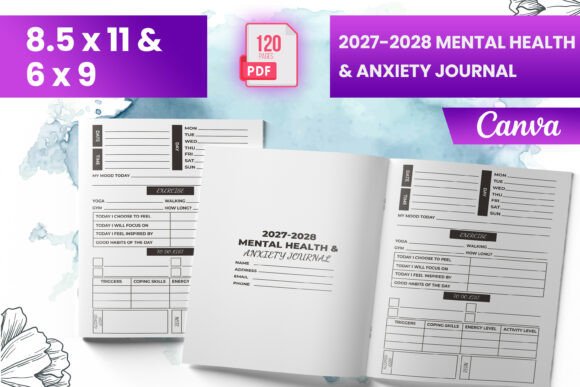
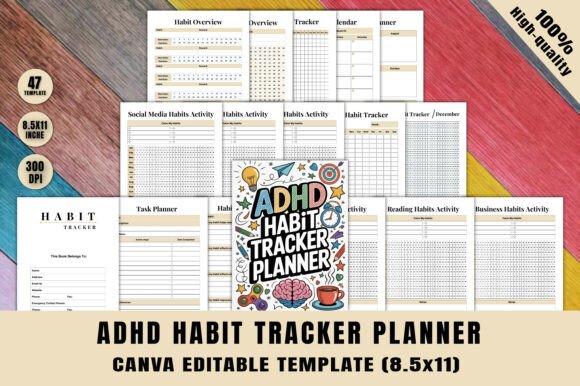
The 2027 ADHD Productivity Journal KDP is delivered as a 40-page printable PDF file in US Letter size (8.5 × 11 inches), with high-quality JPG/PNG files and CMYK color for print compatibility. The choice of no bleed simplifies home printing, and the clean, easy-to-use layout reduces visual noise. The design intentionally avoids cluttered margins, excessive icons, or decorative elements that could trigger distraction. Every element on the page serves a functional purpose.
The inclusion of stream-of-consciousness pages is particularly noteworthy from a design perspective. These pages are minimally formatted—often just lines or a blank space—allowing the user to write freely without the constraint of boxes or categories. This freedom is critical for the ADHD brain, which can feel stifled by overly structured forms. The balance between structured pages (priority matrix, to-do lists) and unstructured pages (stream of consciousness, brain dumps) allows the user to oscillate between focused planning and free-form thinking as their attention permits.
Building Long-Term Productivity Habits Through Reflection
Reflection is the component that most planners miss. The 2027 ADHD Productivity Journal KDP embeds reflection at three points in the day, which helps users build metacognitive awareness over time. By regularly reviewing what worked and what did not, users can identify patterns in their productivity that they might otherwise miss. For example, a user might notice through the evening reflection dump that they consistently struggle with focus after lunch, leading them to schedule low-cognitive-load tasks during that window. This kind of self-insight is the foundation of sustainable productivity for ADHD brains.
The weekly and monthly to-do lists further support this long-term perspective. Rather than reacting to daily urgencies, users can step back and see the bigger picture of their commitments. The 2027 ADHD Productivity Journal KDP encourages a weekly review habit where users can transfer incomplete items, reassess priorities, and celebrate progress. This ritual counteracts the tendency to focus only on what went wrong, which is a common cognitive distortion in ADHD.
Digital and Printable Flexibility
Because the journal is delivered as both a printable PDF and a fully editable Canva template, users have the option to use it in whatever medium suits them best. Some people with ADHD find handwriting to be slower and more deliberate, which helps them process information more deeply. Others prefer typing because it keeps up with their racing thoughts. The Canva template allows for digital use on a tablet with stylus support, or even on a desktop computer for those who prefer typing. This flexibility means the same journal can serve as a paper notebook, a digital file, or a combination of both depending on the day's needs.
For KDP publishers and content creators, the template offers a ready-made product that can be rebranded and resold. The inclusion of both CMYK and RGB color profiles ensures that the journal prints accurately whether produced professionally or at home. The high-quality JPG and PNG files make it easy to include preview images or use pages as standalone resources. This dual-purpose design—functional for end users and practical for creators—adds to the overall value of the 2027 ADHD Productivity Journal KDP as a comprehensive solution.
Overcoming Common ADHD Planning Pitfalls
Many adults with ADHD have tried and abandoned multiple planning systems. The 2027 ADHD Productivity Journal KDP addresses the most common reasons for failure. First, it does not require daily use to be effective. Missing a day does not invalidate the entire system. The morning mind dump picks up wherever the user left off. Second, it does not punish the user for unfinished tasks. The priority matrix and to-do lists are tools for decision-making, not for self-judgment. Third, it provides multiple entry points. If the priority matrix feels too demanding on a low-energy day, the user can simply do a brain dump and call it progress. This low-floor, high-ceiling design is what makes the journal genuinely ADHD-friendly rather than just labeled as such.
The important notes pages serve as a catch-all for the miscellaneous information that often falls through the cracks—passwords, appointment confirmations, book recommendations, random ideas. In traditional planners, these items clutter the daily pages. In the 2027 ADHD Productivity Journal KDP, they have a designated home, which reduces the visual chaos of the daily spread and ensures that nothing truly important is forgotten.
The Broader Context: Planning as a Skill, Not a Personality Trait
It is worth noting that the journal is not a cure for ADHD, nor does it claim to be. It is a tool that supports the development of planning skills, which are often underdeveloped in individuals with executive dysfunction. The consistent use of the morning mind dump, priority matrix, evening reflection, and the other structured pages can help users internalize a planning framework that eventually becomes second nature. Over months of use, the external structure of the journal can help build internal scaffolding for organization and task management.
For professionals, consumers, creators, educators, and researchers alike, the 2027 ADHD Productivity Journal KDP offers a thoughtful, customizable, and practical approach to planning that respects the realities of ADHD while still holding users accountable to their goals. Its combination of capture pages, reflective prompts, and prioritization tools makes it a versatile resource for anyone who has ever felt overwhelmed by the sheer volume of things to do and has wished for a system that simply works with the way their brain operates.
Whether used as a daily companion or a weekly check-in tool, this journal represents a shift away from one-size-fits-all productivity and toward a more compassionate, individualized approach to getting things done in 2027 and beyond.