Sleepy Time Short Stories for Peaceful Nights
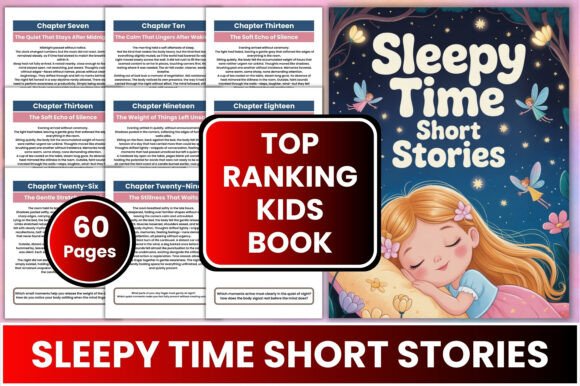
In a world that never stops buzzing, finding a quiet moment to unwind can feel like a luxury. That’s where Sleepy Time Short Stories steps in—a thoughtfully crafted collection of bedtime tales designed to help anyone, not just children, transition from a busy day into a restful night. These are not action-packed adventures or high-drama narratives. Instead, each story unfolds in soft, nighttime moments, focusing on gentle emotions, calm scenes, and imagery that naturally slows the mind. Whether you’re an adult looking for a peaceful end to your own day or a creator seeking a reliable resource for relaxation content, this collection offers something surprisingly versatile.
What makes Sleepy Time Short Stories distinct is its deliberate simplicity. The writing style is minimal—almost whisper-like—with no sudden twists or loud surprises. Each tale stays within a quiet emotional range, making it easy to let go of the day’s worries. Because the stories are short (50 in total), they fit perfectly into a bedtime routine without demanding a long commitment. For adults, this is a gentle way to practice mindfulness before sleep. For families, it’s a tool to ease children into slumber without overstimulation. For creators, it’s a goldmine of content that can be adapted across many formats.
Uses Beyond the Page: Creative Applications
The beauty of Sleepy Time Short Stories lies in its adaptability. The book itself is print-ready, with standard 8.5 × 11 pages and high-quality 300 dpi PNG files, making it easy to upload to platforms like KDP. But the stories inside can serve far more purposes than a cozy paperback. Here are several directions creators, parents, educators, and professionals can take this concept.
Bedtime Audio Content
Many adults now listen to sleep stories on apps or podcasts. The calm, minimal style of these tales is ideal for voice narration. You can record a series of episodes using the stories as scripts, adding gentle background sounds like rain or soft piano. Because each story is short, listeners can finish one before drifting off, without needing to bookmark a chapter. This application works for both personal use (a parent recording for their child) or commercial projects (a sleep channel on YouTube or Spotify).
Classroom or Therapy Calming Moments
Educators and therapists often seek low-stimulus content for transitions or relaxation exercises. The emotional safety woven into Sleepy Time Short Stories makes these tales suitable for quiet corners, nap times, or guided relaxation sessions. A teacher might read one story after recess to bring the class back to center. A child therapist could use the imagery to help young clients visualize a peaceful place. The neutral, warm tone of the stories avoids triggering anxiety, which is a valuable trait for professional settings.
Creative Writing Prompts
For writers, the stories offer more than just reading material. Each tale is built on a quiet moment—a moonlit walk, a soft breeze, a starry window. These minimalist scenes serve as excellent jumping-off points for your own writing. You can take the emotional core of a story and expand it into a longer piece, or use the imagery as a prompt to develop character reflections. Because the writing is spare, it leaves room for interpretation, making it a useful tool for overcoming writer’s block or practicing descriptive techniques without pressure.
Adapting for Different Audiences and Formats
Not every user will approach Sleepy Time Short Stories in the same way. Understanding how to tailor the content for different goals keeps it effective and audience-friendly.
For Families with Young Children
While the collection is written in a soft, universal voice, parents can adapt the reading pace and tone to match a child’s age. For toddlers, simplify the language even further and emphasize soothing repetition. For older children, use the stories as a springboard to discuss emotions—like calmness, gratitude, or contentment. The 50-story count means families can rotate tales without monotony, building a consistent bedtime ritual that signals “time to rest.” Pairing the stories with a quiet activity, like dimming lights or a warm drink, reinforces the sleep transition.
For Adults Seeking Personal Relaxation
Adults can read these stories to themselves as a form of self-care. The key is to treat reading as a intentional wind-down, not just another task. Choose one story, read it slowly, and let the imagery settle. The physical book or print-ready PDF can be part of a nightly routine—perhaps kept on a nightstand with a bookmark. Because the stories are short, they fit into even a tight bedtime window. Some people may also enjoy rewriting a story in their own words as a creative outlet, deepening the relaxation effect.
For Content Creators and Publishers
If you’re a designer, marketer, or small business owner, Sleepy Time Short Stories offers built-in versatility for product creation. The interior is formatted at 8.5 × 11 inches, which is standard for many print-on-demand platforms. You can use the provided print-ready files to publish a physical book under your own brand, or repurpose the stories into a digital product like a calming journal or a guided meditation ebook. The 300 dpi PNG files also allow you to extract individual story pages for social media posts, email newsletters, or downloadable bedtime cards for subscribers. The minimal, emotional style makes the content evergreen—it doesn’t rely on trends or seasonal hooks.
Keeping the Work Clear and Consistent
When working with a collection like this, especially for creative or commercial use, consistency is what builds trust with your audience. Whether you’re a parent, educator, or entrepreneur, maintaining the calm tone across all applications is crucial. Here are practical ways to keep results organized and effective.
- Respect the rhythm. The stories are meant to flow without disruption. If you adapt them, avoid adding abrupt plot turns or loud language. Keep sentences short and imagery quiet.
- Use matching visuals. If you pair the tales with illustrations or videos, choose soft colors, gentle lighting, and minimal movement. High-contrast or busy visuals will counteract the relaxing effect.
- Maintain length discipline. Each story is already short—don’t pad them. The brevity is part of what makes them work for bedtime. If you combine stories, keep the total reading time under 10 minutes for maximum effectiveness.
- Brand the experience. If publishing, use the same calm voice in your cover copy, product description, and marketing materials. This ensures the product matches the expectation set by Sleepy Time Short Stories itself.
Practical Inspiration for Different Goals
Here are a few realistic scenarios to show how different users can apply the collection in their own contexts, each with a specific angle.
Scenario One: A Freelance Podcast Producer
You run a small sleep-focused podcast channel. You purchase the Sleepy Time Short Stories interior and license the content for audio use. You record yourself reading one story per episode, adding a soft instrumental track and a simple introduction. Over 50 episodes, you build a consistent library that attracts listeners looking for non-spoken relaxation. You can also offer bonus content—like written transcripts—as lead magnets. The minimal writing style means you don’t need heavy editing, keeping production costs low.
Scenario Two: A Parent with a Creative Side Hustle
You have young children and enjoy designing printables. You use the PNG files to create illustrated bedtime story cards. Each card features a story on one side and a simple calming prompt on the other (e.g., “What does the moon look like tonight?”). You print them on cardstock, bundle them in a small box, and sell them on Etsy. The product serves both your own family (used nightly) and customers who want offline screen-free sleep tools.
Scenario Three: A Teacher Building Emotional Resilience
You teach early elementary and want to incorporate more emotional literacy into your classroom. You adapt three stories from the collection for a “quiet time” station. Students can choose a story to read independently or listen to an audio version on headphones. You follow each story with a one-sentence reflection: “What color would you paint the sky in this story?” The activity builds vocabulary, imagination, and emotional regulation without requiring high energy or competition.
Why This Approach Works for the Long Term
What makes Sleepy Time Short Stories more than a one-time resource is its alignment with timeless human needs: rest, safety, and quiet. In an age of constant notifications and fast content, anything that helps people slow down becomes valuable. The 50-story structure ensures variety without overwhelming choice. The gentle emotional storytelling creates trust—readers know they won’t be jolted or upset. For creators, this reliability translates into repeat usage and word-of-mouth recommendations.
Moreover, the print-ready and high-resolution formats remove technical barriers. You don’t need to design a layout from scratch or worry about file compatibility. The interior is ready for KDP upload, which saves hours of formatting work. This allows you to focus on the creative and strategic side: how to present the stories to your specific audience, whether through a physical book, a digital product, or an audio series.
Bringing It All Together
Whether you are seeking a personal nightly ritual or a professional resource to build a business around calm content, Sleepy Time Short Stories provides a solid foundation. Its strength lies in its simplicity—the very quality that makes it effective for sleep also makes it adaptable for creative reuse. By respecting the quiet nature of the tales and matching your format to the intended effect, you can produce results that feel genuine and useful.
Start by exploring the collection itself. Read a few stories aloud. Notice how they settle into the mind. Then consider your own goals: Do you need a bedtime anchor? A content pipeline? A classroom tool? Let the structure of the stories guide your approach. The peace they offer is not passive—it’s an intentional space you can reshape for many good purposes.