1000 Prayer Journal Prompts Planner
There’s a difference between wanting to pray more consistently and actually sitting down to do it. Life gets loud. Schedules fill up. By the time you remember to pause and reflect, your mind is already running through tomorrow’s to-do list. That’s where the 1000 Prayer Journal Prompts Planner steps in. It doesn’t just give you blank pages and hope for the best. It provides a structured path through morning devotion, gratitude, healing, forgiveness, guidance, and evening surrender — all in one place.
Whether you’ve kept a journal for years or you’re picking one up for the first time, this planner is built to help you show up, day after day, without overthinking what to write.
What the 1000 Prayer Journal Prompts Planner Actually Does
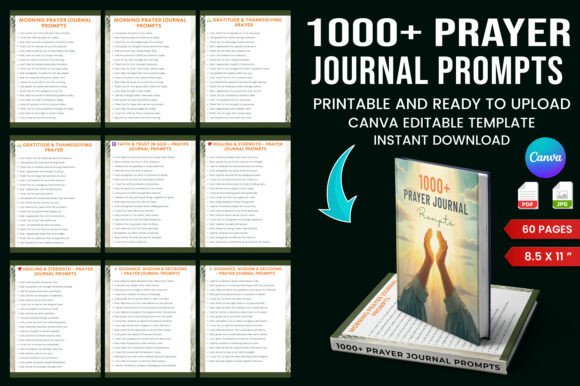
At its core, this planner is a collection of 1000 guided prompts divided into categories that match the natural rhythms of life. You get morning sections to start your day with intention, gratitude prompts to shift your focus toward thankfulness, faith-building questions to strengthen your trust, and healing pages for when life feels heavy. There are also prayers for guidance when decisions are unclear, forgiveness exercises to release resentment, and evening reflections to close your day with peace.
Each prompt is written to be simple enough to use when you’re tired but meaningful enough to stir real reflection. The planner also includes blank notes pages for personal prayers or thoughts that don’t fit neatly into a prompt. It works well as a printed journal or a digital file, which makes it flexible for different routines.
Where and When People Use This Planner in Real Life
The real value of this journal shows up in the moments when you need it most. Here are several realistic scenarios where the 1000 Prayer Journal Prompts Planner becomes more than just a notebook.
Morning Coffee and Quiet Time
For many people, mornings are the only window of silence before the day takes over. You pour your coffee, sit in your favorite chair, and open the planner. Instead of staring at a blank page wondering what to pray about, you read a prompt like “What am I grateful for today that I usually overlook?” That question alone can shift your entire mindset before you even check your phone. The morning prayer sections are designed to help you start with focus and gratitude, not rush and anxiety.
Navigating a Tough Season
Life doesn’t always cooperate with your plans. Whether you’re dealing with a loss, a broken relationship, a health struggle, or just a season of sadness, the healing and strength prompts become essential. They don’t tell you to pretend everything is fine. Instead, they guide you through honest conversations with God about where you hurt. Prompts like “What wound do I need to bring to You today?” or “Where do I need Your strength the most right now?” create space for real emotion without forcing you to perform positivity.
Making Big Decisions
Entrepreneurs, freelancers, educators, and small business owners often face choices that carry weight. Should I take this client? Is this the right direction for my family? Am I supposed to stay or move forward? The guidance and wisdom prayer sections help you process those questions with clarity. Instead of making decisions based on fear or pressure, you can use prompts that ask, “What is the wise step today?” and “Where am I relying on my own understanding instead of trusting God?” Over time, this practice builds confidence in your decision-making because you learn to filter everything through a prayerful perspective.
Evening Wind-Down
After a long day, your mind might still be running. The evening reflection and surrender prompts help you release the day’s worries. Instead of scrolling through your phone until you fall asleep, you open the planner and respond to a prompt like “What burden do I need to give to God before I rest?” This small ritual can improve your sleep quality and emotional balance because you’re not carrying everything into the next day.
Creative and Professional Settings
Bloggers, content creators, and writers sometimes use this planner as a source of inspiration. The prompts can spark ideas for devotionals, social media posts, or newsletter content about faith and personal growth. Marketers and publishers working in the faith-based space can also use the structure of the planner to understand what their audience is looking for in a journaling tool. If you’re a KDP publisher or print-on-demand seller, the 1000 Prayer Journal Prompts Planner serves as a strong product concept that meets a genuine need — daily spiritual consistency with minimal setup.
Group or Family Use
Some people use the planner in small groups or with their spouse. You can pick a prompt each evening and share your answers with each other. This turns journaling into a conversation starter rather than a solo activity. It also helps families build spiritual habits together without making it feel forced. The prompts are general enough that different people can interpret them in their own way, yet specific enough to keep everyone on the same topic.
Who Benefits Most from This Type of Planner
While anyone can use the 1000 Prayer Journal Prompts Planner, certain groups tend to get the most out of it.
Busy adults who want to pray but struggle to find words benefit from the guided structure. You don’t need to come up with something profound every day. You just answer the prompt.
People going through healing or recovery often find the forgiveness and inner peace sections especially helpful. These prompts don’t rush you. They let you process at your own pace while still moving forward.
Creators and entrepreneurs who balance work and faith appreciate the planner because it fits into small pockets of time. You can open it for five minutes in the morning and still feel like you’ve had a meaningful spiritual moment.
Those new to journaling may feel intimidated by blank notebooks. This planner removes that barrier by giving you a starting point every single time.
What to Consider Before Using or Buying the Planner
Before you download or purchase the 1000 Prayer Journal Prompts Planner, there are a few things worth thinking about to make sure it fits your life.
Consistency matters more than perfection. The planner works best when you use it regularly, even if some days you only write one sentence. Don’t pressure yourself to fill every line. The goal is connection, not completion.
Choose a format that matches your habits. If you prefer writing by hand, print the planner and keep it with your Bible or in your bag. If you’re always on your phone, use the digital version on a tablet or note-taking app. The planner includes an editable Canva link, so you can customize pages or type directly if that works better for your workflow.
Not every prompt will resonate every day. That’s normal. Some days the morning prompt might hit perfectly. Other days, you might skip to the evening section because that’s where you are emotionally. The planner gives you enough variety that you can move between sections without feeling locked into one track.
Consider your long-term goals. If you’re a publisher or content creator, this planner works well as a product or lead magnet. Its structure appeals to people looking for consistent spiritual growth tools. For personal use, it functions as a year-long journey that builds depth over time.
How the Features Connect to Real Outcomes
Let’s move past the feature list and talk about what actually changes when you use the planner.
The 1000 guided prompts aren’t just filler. They prevent writer’s block during prayer time. Instead of cycling through the same three requests every day, you find yourself exploring areas of your life you hadn’t thought to pray about — like gratitude for small kindnesses, trust in uncertain seasons, or healing from old wounds you thought were buried.
The morning and evening structure creates a natural bookend to your day. Starting with faith and ending with surrender helps regulate your emotional state. Many users report feeling less anxious and more grounded after a few weeks of consistent use.
The forgiveness and peace sections serve a practical purpose. Holding onto resentment drains energy that could go toward your work, relationships, or creativity. Writing through forgiveness prompts helps you release that weight in a concrete way. You’re not just thinking about letting go. You’re writing it down, which makes the decision more real.
The notes pages give you breathing room. Sometimes a prompt will unlock something deeper, and you need extra space to write it out. Having that option means you don’t have to stop your flow or hunt for another notebook.
A Practical Approach to Getting Started
If you decide to use the 1000 Prayer Journal Prompts Planner, here’s a simple way to begin without overcomplicating it.
Open to the morning section and read the first prompt. Write whatever comes to mind, even if it’s just a few words. Don’t worry about grammar or eloquence. That’s it for day one.
On day two, answer the next prompt. If you miss a day, start again where you left off. The planner doesn’t judge you for gaps. Over time, you’ll naturally explore other sections as different seasons of life call for different kinds of prayer.
Use the evening prompts when your mind is full before bed. Use the healing prompts when life hurts. Use the guidance prompts when you’re stuck. The planner is designed to move with you, not lock you into a rigid schedule.
Final Thoughts
The 1000 Prayer Journal Prompts Planner is not a magic solution. It’s a tool. But tools matter when they help you build habits that shape your inner life. Whether you’re navigating a difficult season, building a business, raising a family, or simply trying to stay connected to God in the middle of a busy week, this planner gives you a place to start and a reason to keep going.
It’s structured enough to guide you yet flexible enough to meet you wherever you are emotionally, spiritually, or practically. If you’ve been looking for a way to deepen your prayer life without the pressure of figuring it all out on your own, this might be the right step forward.